


A support project for prevention of human trafficking, implemented for two and a half years, comes to an end
16.12.2015. The project “Support Programme of the Society “Shelter “Safe House”” Operation for Prevention of Human Trafficking in Latviaˮ, which was implemented since July 2013, comes to an end in December. The purpose of this project was to increase the role of the society in implementation of human trafficking prevention activities on the national level, by increasing the institutional capacity of the society and ensuring support activities for its operation. As the target group the project involved non-governmental organizations, representatives of public administration and local authorities who are dealing with human trafficking issues, members, workers and volunteers of “Shelter “Safe House””, as well as inhabitants of Latvia.
Within the framework of the project, in 2013, there has been established and started its operation the first Latvian 24/7 Helpline (+371) 28612120 for prevention of human trafficking. From August 2013 to December 2015, the Helpline has been used by inhabitants in total 471 times. Most often inhabitants have been interested about sham marriages and safe employment abroad. In order to ensure the basis for quality service and promote recognition of the Helpline, in 2014, the society “Shelter “Safe House”” has organized training of the Helpline specialists, and in cooperation with a socially responsible company www.irdarbs.lv has developed visual materials – informative banners and posters, which were distributed in 28 branches of the State Employment Agency and sent to more than 600 schools in Latvia, 46 youth and children education centres, as well as published on the society homepage http://www.draugiem.lv/www.patverums-dm.lv/ and homepages of cooperation partners. In 2015, a cooperation agreement with the Latvian Hostel Association was concluded, and the information about human trafficking and the Helpline was distributed in hostels in Riga and across the whole Latvia.
In order to ensure quality service provided by the Helpline operators, in-depth training was organized, where the necessary knowledge was acquired and improved by workers of the society and volunteers of the society, who participate in ensuring of activities. Within the project specialists and leading workers of the society also had an opportunity to attend monthly supervisions and receive advisory support concerning issues related to their professional operation. Also two workshops on qualitative involvement in decision- and policy-making processes, as well as development of the public image of organization have taken place. By using the society homepage, involving the organization brivpratigais.lv, using eLPA News page, and by publishing activities of the society in mass media, involvement of volunteers in the organization was promoted.
Aimed to develop interinstitutional cooperation for prevention of human trafficking, providing the risk groups more frequently subjected to human trafficking with preventive measures, and putting special emphasis on regions, in the NGO coalition platform for prevention of human trafficking, which was established in December 2013, 12 organizations joint together: ”Shelter ”Safe House””, ”Latvian Association of SOS Children`s Villages”, “Structural unit of ”Social Service Agency” Family Crisis Centre ”Mīlgrāvis”, “Samaritan Association of Latvia” Crisis Centre for Children and Women ”Māras centrs”, ”Crisis Centre of Talsi Region”, ”Baltic Regional Fund”, “For Vidzeme Free of Human Trafficking”, “National Council of Irish Latvians”, ”Crisis Centre for Families and Children ”Paspārne””, foundation ”Centre Valdardze” , Family Support Centre-Shelter of Daugavpils City Council and ”Salvation Army”.
Also an active work has been done within the project for education of youth on human trafficking – a lesson plan for the informal education method “Forumteātrisˮ (“Forum Theatreˮ) has been developed in 2014, which has been used in 2015 for education of students on the issue of human trafficking. In total 15 such lessons have been organized, informing 655 young people all around Latvia about human trafficking.
The team of “Shelter “Safe Houseˮˮ professionals indicates that the work on prevention of human trafficking doesn`t stop and is continued in such projects as “Improved Anti-Human Trafficking Solutions: Baltic-Russian Cooperation Networkˮ and “Preventing Human Trafficking and Sham Marriages: A Multidisciplinary Solutionˮ (HESTIA).
The project "Society’s “Shelter “Safe House”” Action Support Programme to Reduce Human Trafficking in Latvia" is financed by Iceland, Lichtenstein and Norway. The programme NGO Fund ir financed by the EEA Financial Mechanism and Latvian government. Find out more about the EEA Financial Mechanism programme NGO Fund here. Website of the Society Integration Foundation: http://www.sif.lv Website of the EEA Financial Mechanism in Latvia: http://www.eeagrants.lv Official website of the EEA Financial Mechanism: http://www.eeagrants.org. Responsibility for the content of this publication lies with the society “Shelter “Safe House””.
More information: Rasa Salina, NGO "Shelter "Safe House"", PR Specialist, e-mail: rasa.salina@gmail.com
Project, within the framework of which extensive informative activities on reduction of human trafficking were carried out throughout Latvia, has come to an end
30.11.2015. Project, within the framework of which extensive informative activities on reduction of human trafficking were carried out throughout Latvia, has come to an end.
The aim of the activities carried out within the framework of the project over 15 months was to use innovative services to expand the support system for the victims of human trafficking, raise awareness of social workers and employees of the organizations of the national NGO coalition, as well as to create interactive preventive measures for education of children and young people. The target group of the project are the victims of human trafficking, young people – as one of the major risk groups, people with disabilities, relatives, friends and acquaintances of the victims and potential victims, NGOs representing the rights and interests of the aforementioned groups, the members, staff and volunteers.
To provide the victims of human trafficking with support, a support group was ensured within the framework of the project, providing various forms of assistance, including psychosocial support to the victims of human trafficking who have suffered from sexual violence a long time ago. In total, 20 meetings of the support group took place.
A two-day training seminar was organised in Riga to develop the professional skills of the employees, members and volunteers of the organisations of the NGO coalition platform for prevention of human trafficking established on 17 December 2013, as well as to inform about the current events related to human trafficking in Latvia, Europe and elsewhere. Two exchange visits were organised for 12 member organisations of the platform, visiting the project cooperation partners “Living for Tomorrow” in Estonia and “La Strada Foundation against Trafficking in Persons and Slavery” in Poland.
Within the framework of the project, the experts of the society and volunteer coordinators trained the volunteers of the society, the organisations of the NGO coalition platform and other youth organisations to prepare them as peer educators. To popularise volunteering and raise awareness on human trafficking, the peer educators organised five daylong simulation games for the young people of risk groups in Riga and the regions. In Olaine, Tukums, Salaspils, Dobele and Valmiera, 98 young people took part in the simulation game and acquired new knowledge.
To inform and educate the public, including young people, the informative trailer of the society visited 39 schools, children and youth centres in Riga and regions of Latvia, informing almost 2000 students about human trafficking.
In order to facilitate the development of professional social work, five regional seminars were organized in Dobele, Talsi, Madona, Cesis and Preili municipalities within the framework of the project and a practical methodological material for social workers on the work with the victims of human trafficking was developed. In total, 141 specialists of the particular field were trained in the seminars.
The social rehabilitation service of the society “Shelter “Safe House”” was improved and an ISO 9001 quality management system was developed within the framework of “Multidisciplinary Initiatives for Prevention of Human Trafficking”.
This activity is carried out in the framework of the project „Multidisciplinary initiatives for prevention of human trafficking” financed by Iceland, Liechtenstein and Norway. Implementation of the project will be commenced on 01.09.2014, and it will be completed on 30 November of this year. You can find more information on the EEA Grants programme “NVO fonds” here on the Latvian website of the EEA Grants: http://www.eeagrants.lv. official website of the EEA Grants: http://www.eeagrants.org. Society “Shelter “Safe House”” is responsible for the content of this publication.

Third-country nationals are invited to use free consultations
16.11.2015, Riga. The non-governmental organization “Shelter “Safe House””, which, as of October 1, ensures integration support measures for third-country nationals*, including refugees and persons having the alternative status, within the framework of the participation agreement concluded with the Ministry of Culture , informs that their specialists have provided a total of 102 consultations on social and legal issues in October.
The greatest interest and most of the questions from the target group concerned such issues as: opportunities to learn Latvian; residence permits and other issues related to migration; child allowances; entrepreneurship, including registration of companies, tax system; employment relationship; divorce. Specialists of the organization indicate that, during the consultations, the necessary support has been provided also in writing letters and applications to public institutions, and explaining the information on accessibility of social services, and decisions of public institutions.
One of the consultants of “Shelter “Safe House”” – lawyer Alvis Šķenders – notes that, taking into consideration the different countries clients are coming from, most of the times the intermediary languages during consultations have been English and Russian. Most frequently, third-country nationals have wanted to receive consultations in person – 77 times in total. Consultations via telephone have been provided 23 times, whereas via e-mail – 2 times.
“Our practice shows that using an individual approach for resolution of social cases results in the most positive solution, therefore, it is very significant that the clients have an opportunity to receive such support from the state. It not only gives people a more in-depth understanding of their problem and helps to find an individual solution together with a consultant, but also provides an opportunity to obtain more information on their rights and opportunities in the Republic of Latvia,” indicates A. Šķenders and invites third-country nationals to be active and use this unique opportunity.
Free consultations are provided by phone +371 25565098, e-mail: konsultacijas@patverums-dm.lv, as well as in person – at the premises of “Shelter “Safe House””, Lacplesa Street 75-9, Riga.
Consultations are provided under the participation agreement concluded between the Ministry of Culture of the Republic of Latvia and “Shelter “Safe House” on 17 September 2015, on execution of certain public administration tasks for integration of third-country citizens. The agreement provides that, as of October 1, the society shall ensure integration support measures for third-country nationals, including refugees and persons having the alternative status. It is planned that during a four-month period within the framework of the agreement the needs of third-country nationals will be identified in order to improve the process of their integration in Latvia. Experts of the society inform that, during the four-month period, it is planned to identify the needs of third-country nationals to improve the process of their integration in Latvia.
*A third-country national is any person who is not a citizen of the member states of the European Union, the European Economic Area or the Swiss Confederation
Information was prepared by: Rasa Salina (Rasa Saliņa), Communications and Social Media Expert, phone: 22026355, e-mail: rasa.salina@gmail.com
Holding an informative event - a master class on the issue of human trafficking
06.11.2015. On October 19, this year, an informative educational event was organized for the society cooperation partners and media in order to inform the participants on the achievements of "Shelter "Safe House"" in preventing the human trafficking, and to give participants a chance to take an interactive class – a master class on the issue of human trafficking. Among the active participants more than 30 various public institutions (including schools), non-governmental organizations, embassies and media representatives were involved.
"During the event, we tried to show the approaches we use when working with youth to develop resilience of this vulnerable demographic group in cases that involve taking different opportunities in foreign countries. I must admit, every participant of the class had their own view on human trafficking. Therefore, like we work with young people, we discussed the details of the topic and their personal experience, forming collective knowledge," Reinis Gravitis (Reinis Grāvītis) said, one of the educators on human trafficking of "Shelter "Safe House"". In Mr. Grāvītis opinion, it is essential that the matter is understood by various parties involved in preventing human trafficking. "Some may take personal interest, while others may find this training and education helpful in improving cooperation professionally, regardless of whether one is a social worker, classmasster, project manager or accountant – because we work as a team."
As Mr. R.Gravitis told, the daily work of the youth educators involves conducting simulation games, organizing and conducting activities at schools, youth centres, orphanages and elsewhere. Their mission is to explain to youth the process of human trafficking, starting with recruitment. "During the training we discuss helpful issues like on-line safety, parts of labour contract, safety matter, when going or residing abroad, solving crisis situations etc. We discuss trust and safe ways to get information a lot." According to him, the educational work has been made at over than 100 educational institutions throughout Latvia.
The event also involved Krista Lubina (Krista Lubiņa), a student of form 11, Riga Hanza Secondary School, who is working on a scientific research paper appraising the efficiency of "Shelter "Safe House"" classes on human trafficking and has shared her findings. She told that she had drawn her first conclusions based on youth surveys before and after these activities. In particular, training of such kind contributes to the education of young people immensely. "While initially a student may have had poor or no knowledge about human trafficking, after having taken the classes he/she becomes well informed on the issue, including recruitment and help opportunities," Ms. Lubiņa explained. She added that her research work is still in progress, and she expressed her gratitude to "Shelter "Safe House"" for the significant educational work in schools and the given collaboration chance.
Within the event, words of appreciation for work of the society were also said by Iveta Lazdina (Iveta Lazdiņa), Member of Board, "Bureau Veritas Latvia", who awarded the ISO 9001 quality management system certificate to society "Shelter "Safe House"". "Society "Shelter "Safe House"" has made a huge step forwards, showing that a non-governmental organization can also be recognised for its work performance, by auditing and appraising its process planning, analysis and development, in accordance with the ISO 9001 standard for quality management systems. By receiving the certificate, the society shows preparedness to continue operating according to systemic requirements: social rehabilitation services are evaluated and controlled, workers are prepared and trained, communication is regulated for how to act in different situations, including very tense, personally sensitive and sometimes very unpleasant situations so that they can be solved promptly and professionally", the "Bureau Veritas Latvia" representative told in her speech. "Congratulations and good luck to the entire team! The ISO 9001 quality management certificate was earned thanks to collective teamwork and contribution," Ms. Lazdiņa concluded.
This activity is carried out in the framework of the project „Multidisciplinary initiatives for prevention of human trafficking” financed by Iceland, Liechtenstein and Norway. Implementation of the project will be commenced on 01.09.2014, and it will be completed on 30 November of this year. You can find more information on the EEA Grants programme “NVO fonds” here on the Latvian website of the EEA Grants: http://www.eeagrants.lv official website of the EEA Grants: http://www.eeagrants.org Society “Shelter “Safe House”” is responsible for the content of this publication.
"Shelter "Safe House"" starts implementing the task delegated by the state administration on the integration of third-country nationals
01.10.2015. Based on the participation agreement on carrying out certain state administration tasks for the integration of third-country nationals* signed between the Ministry of Culture of the Republic of Latvia and society “Shelter “Safe House”” on 17 September 2015, the association launches measures for supporting the integration of third-country nationals, including refugees and persons with alternative status, as of October 1.
It is expected tt by 31 January 2016 society “Shelter “Safe House”” will provide information and regular consultations to third-country nationals and their family members on topical issues related to integration (education, employment, health care, etc.).
Consultations are provided by phone +371 25565098, e-mail: konsultacijas@patverums-dm.lv, as well as in person – at the premises of “Shelter “Safe House””, Lacplesa Street 75-9, Riga.
Experts of the society inform that, during the four-month period, it is planned to identify the needs of third-country nationals to improve the process of their integration in Latvia.
*A third-country national is any person who is not a citizen of the member states of the European Union, the European Economic Area or the Swiss Confederation
Information was prepared by: Rasa Salina (Rasa Saliņa), Communications and Social Media Expert, phone: 22026355, e-mail: rasa.salina@gmail.com
Topical Issues in the Field of Prevention of Human Trafficking Have Been Announced Within the Framework of Event
28.08.2015. On 7 August of this year, ”Shelter ”Safe House”” organised an informative event attended by employees, friends and cooperation partners of the society, as well as partner organisations of the NGO coalition platform for prevention of human trafficking. This event was aimed to inform about achievements of the society in the field of prevention of human trafficking, introduce participants with impressions of the lawyer of ”Shelter ”Safe House”” and the operator of 24/7 Helpline for prevention of human trafficking Gita Miruškina, after receiving the Hero Prize 2015 in USA, and to inform about new members joining the coalition.
It was announced to the participants of the event that starting from year 2007 the team of professionals of the society has implemented the following activities: ensured assistance for 113 victims of human trafficking; organised extensive public awareness campaigns (from 2009 such activities have been implemented each year – 8 in total); in 2013, has created and has maintained up to this moment the first 24/7 Helpline 28612120 in Latvia for prevention of human trafficking. Over a two-year period, operators of the helpline have provided consultations 409 times – most frequently on cases of marriages of convenience. During the seven months of this year, 116 people have requested assistance with mediation of the Helpline.
In the framework of the event the head of the society ”Shelter ”Safe House”” Sandra Zalcmane welcomed the new members of the NGO coalition for prevention of human trafficking – ”Crisis Centre for Families and Children ”Paspārne”” (Ventspils), foundation ”Centre Valdardze” (Valmiera), Family Support Centre-Shelter of Daugavpils City Council (Daugavpils) and ”Salvation Army” (Riga).
”For identification of human trafficking as a social problem and providing assistance to victims of human trafficking special knowledge is required, regular acquisition of which ensures accessibility of qualitative service. Therefore, it is significant that today four new organizations join the coalition, thereby extending the number of those organizations – already 12 – which will continue acquiring knowledge on the issue of human trafficking in order to ensure professional assistance to victims of this offence all around Latvia,” indicated S. Zalcmane.
In December 2013, 6 organizations joined together forming the NGO coalition platform for prevention of human trafficking, aimed to develop inter-institutional cooperation for prevention of human trafficking through ensuring preventive measures for risk groups more frequently exposed to human trafficking, paying special attention to regions. ”Shelter ”Safe House””, ”Latvian Association of SOS Children`s Villages”, structural unit of ”Social Service Agency” Family Crisis Centre ”Mīlgrāvis”, ”Samaritan Association of Latvia”, Crisis Centre for Children and Women ”Māras centrs”, ”Crisis Centre of Talsi Region”, ”Baltic Regional Fund”. In August 2014, these organisations were joined by the society ”For Vidzeme Free of Human Trafficking” registered in Madona region, and in October – by the society ”National Council of Irish Latvians”.
The project "Society’s “Shelter “Safe House”” Action Support Programme to Reduce Human Trafficking in Latvia" is financed by Iceland, Lichtenstein and Norway. The programme NGO Fund ir financed by the EEA Financial Mechanism and Latvian government. Find out more about the EEA Financial Mechanism programme NGO Fund here. Website of the Society Integration Foundation: http://www.sif.lv Website of the EEA Financial Mechanism in Latvia: http://www.eeagrants.lv Official website of the EEA Financial Mechanism: http://www.eeagrants.org. Responsibility for the content of this publication lies with the society “Shelter “Safe House””.


Extensive Project for the Integration of Third-Country Nationals in Latvia Has Come To a Close
30.06.2015. According to society “Shelter “Safe House”” and Centre for Public Policy PROVIDUS, June 30 marks the end of the project for the integration of third-country nationals Diverse Solutions for Public Education and Integration 3 launched on November 28, 2014 and supported by the European Fund for the Integration of Third-Country Nationals. It was aimed at developing diverse support, adaptation, and integration opportunities available to third-country nationals* as well as motivating the target group to engage in social processes. According to representatives of the society, information about integration matters published on the website www.patverums-dm.lv was viewed by over 14 000 people.
The following activities were organized under the project in order to improve the opportunities to learn and practise Latvian, ensure accessibility of social support and establish social contacts:
Latvian language course for various language skill levels as well as an opportunity to take the state language exam in 6 towns across Latvia – Aluksne, Balvi, Liepaja, Stopini, Olaine, and Riga.
For the purpose of reducing the psychological language barrier of participants the said towns also hosted Latvian conversational language clubswhere the participants were given a chance to develop their language skills and go on various trips to get to know Latvian culture, traditions, history, and heritage.
Creative Integration classes – support measures for vulnerable groups of third-country nationals as well as cooperation opportunities in volunteer work for international youth encouraged applying Latvian language skills in daily life and motivated to continue learning Latvian.
Within the framework of the said activities 2 volunteer trainings were organized and separate youth activities were initiated.
On Ricu Racu information day held on June 13 participants of all project activities gathered at the Ethnographic Open-Air Museum of Latvia. The event was a chance for the participants to meet new people, tell about their region and present the guide Quest for Diversity compiled by them, receive project expert consultations on important issues as well as practise Latvian on trips and at various creative workshops.
Professional consultants helped find individual solutions for various daily, social or legal issues as well as orientate themselves in the resources available in Latvia. Consultations were mostly given on residential permits, employment, family reunion, inheritance issues.
Solutions for problem situations third-country nationals faced were shown on LNT channel as an 8 episode series Find Out Where to Find Out as well as at online TV NVOTV roundtable discussions. Accessibility of information was also ensured by the online resource www.dzivotlatvija.lv.
For the purpose of promoting development of NGOs of active immigrants a mentor programme was piloted to encourage engagement of third-country nationals. Third-country nationals and mentors of recently naturalized Latvian citizens were engaged in an activity organized by the Centre for Public Policy PROVIDUS. They improved their leadership capacity, developed an initiative binding to their community and received the necessary support for its implementation. In order to facilitate social awareness of migrants in Latvia an online platform www.voiceofmigrants.eu was developed for the project target group to tell about themselves and their lives in Latvia.
NGO capacity and cooperation matters during the project were solved with the help of improving a Dialogue platform. Within the framework of this platform meeting NGOs active in the area of immigrant integration exchanged topical issues and needs of the third-country nationals as well as discussed the essential political instruments – planning EU Asylum, Migration and Integration Fund activities in Latvia, legislation and action policy affecting immigrant integration.
The project is co-financed by the European Union. Implementation of the project "Diverse Solutions for Public Education and Integration 3" is co-financed by the European Fund for the Integration of Third-Country Nationals (75%) and state budget (25%). This publication is supported by the European Fund for the Integration of Third-Country Nationals. Responsibility for the content of this publication lies with the society “Shelter “Safe House””.


Project to Improve Expert Knowledge for Work with Third-Country Nationals Has Come to a Close
25.06.2015. June 30 marks the end of the project Improving Cross-Institutional and Cross-Occupational Cooperation for Work with Third-Country Nationals aimed at improving and broadening cooperation between various institutions and professionals for work with third-country nationals and strengthening their skills and the ability to implement integration measures.
According to the project leader Alvis Skenders (Alvis Šķenders), five informative 1-day seminars in Olaine, Ozolnieki, Stopini, Aluksne, and Balvi assessed the possibility to continue the integration activities already initiated by the participants as well as the chance to ensure the said activities in long-term. 100 participants were educated in the course of these seminars.
3-day theoretical seminar Third-Country National – Institutional Client gave 27 participants the opportunity to learn about cultural differences, diversity management and social work with representatives of different cultures, reflected and separated the existing situation and issues in the area of immigrant integration in Latvia from the desirable one thus allowing participants to see what should be done in Latvia and how each and every one of them contribute to improve the situation in the area of immigrant integration.
The practical seminar organized in May was aimed at promoting development of social and professional competencies in the area of immigration, cross-cultural communication, and cultural diversity in participants who had gained knowledge at the theoretical seminar and improved their qualification for work with immigrant groups.
Society “Shelter “Safe House”” in association with Latvian Association of Higher Education Institutions for Life-Long Learning (LAKMA) also organized a seminar for representatives of universities and colleges who work with third-country nationals on a daily basis to improve competence of teaching and administrative university staff in the area of cross-cultural communication and knowledge about receiving and integrating third-country nationals as well as facilitate shaping of professional identity and room for analysis and reflection on good practice.
In order to create a dialogue among teaching and administrative staff at universities and colleges, third-country nationals – university students, and experts (consultants) a discussion / contact exchange was organized under the project. It was aimed at understanding the point of view of all parties regarding the current situation and work with third-country nationals at universities and colleges as well as coming up with suggestions for institutions of higher education in respect of work with third-country nationals – students.
The project is (co)funded by the European Union. Implementation of the project “Improvement of interinstitutional and intersectoral cooperation on working with third-country nationals” is co-funded by the European Fund for the Integration of Third-Country Nationals (75%) and from the state budget (25%). This publication has been prepared with the support of the European Fund for the Integration of Third-Country Nationals. Society “Shelter “Safe House”” is responsible for the content of this publication.
Helpline operator: most often callers have contacted the helpline about sham marriage and employment issues
22.05.2015. This year the helpline 28612120 for prevention of human trafficking of the society "Shelter "Safe house"" has already received 83 calls. During the time period from January to late April people have most often wanted to receive information on sham marriage andworking safely abroad.
Helpline operator Gita Miruškina tells: "Being a helpline operator has showed me that 24 hour helpline is useful for people wishing to call us, contact us and report a potential case of human trafficking or share their own experience. It is one of the most accessible and easiest ways to report such crime, a violation of human rights and for us to get involved in order to help the caller. Most frequently callers still contact the helpline to receive information on sham marriage". She says that as the summer approaches a number of callers contact the helpline to get information on employment issues since people plan to work abroad and want to stay safe and secure abroad ".
During the 12 months of last year the 24 hour helpline specialists of the society have received 220 calls. Most frequently, callers wanted to receive information on different issues related to human trafficking risks (140 times). Also received: callers wanting information on fictitious marriage or its prevention and reporting cases of sham marriage (63 times); callers wanting information on forced labour or violations of employment rights and reporting cases thereof (14 times); and callers wanting information on sexual exploitation (3 times)
Information on the helpline is available also at 28 NVA branches. It has also been distributed to 600 schools in Latvia and 46 youth and children education centres, as well as posted on the society’s page on the website www.draugiem.lv http://www.draugiem.lv/www.patverums-dm.lv/ and on cooperation partners’ websites.
The project “Action support programme of the Society “Shelter “Safe House”” to reduce human trafficking in Latvia” is funded by the EEA financial instrument and the Latvian state. It has been implemented since July 2013 and several activities to reduce the problem of human trafficking are taking place within it. Members, workers, volunteers of the “Shelter “Safe House””, as well as other non-governmental organisations are involved in the project as a target group.
Find out more about the EEA Financial Mechanism programme NGO Fund here. Website of the Society Integration Foundation: http://www.sif.lv Website of the EEA Financial Mechanism in Latvia: http://www.eeagrants.lv Official website of the EEA Financial Mechanism: http://www.eeagrants.org. Responsibility for the content of this publication lies with the society “Shelter “Safe House””.
Third-Country Nationals Study Latvian Language and Get to Know Latvia
20.04.2015. To develop various support, adaptation and integration possibilities available to the third-country nationals*, as well as to increase the motivation of the target group to participate in social processes, the non-governmental organization “Shelter “Safe House””, by involving its collaboration partner the association "Centre for Public Policy PROVIDUS", launched a support project “Diverse Solutions for Public Education and Integration 3", at the end of the last year which ends on 30 June this year.
More than a hundred and fifty third-country nationals are attending the Latvian language courses in six project implementation places – Riga, Olaine, Stopiņi, Liepāja, Alūksne, Balvi, there are two training groups of different proficiency level provided in every city and town. In total, there are 12 study groups.
To support the Latvian language learning activities at the local and regional level within the framework of the project, there are also integration programmes for practical use of the Latvian language provided, in which the third-country nationals involved in the project participate. There are 13 conversational clubs in the above mentioned cities and towns, 10 of them are in the regions. In Riga, the activity is offered for seniors and other vulnerable groups, as well as there is one group working with the foreign students – third-country nationals. During the classes, the participants get to know the culture, traditions, history of Latvia, its objects of cultural heritage; thereby community resources of local significance – museums, libraries, schools, culture centres – are involved, thus reducing psychological barrier to start speaking Latvian. Since the launch of the Project, the participants of Riga training course have attended the National Library of Latvia, the participants of Stopiņi Municipality training course visited Kr. Barons’ Memorial Museum, and the third-country nationals of Alūkne were involved in weaving Alūksne town anniversary belt.
There are also Integration classes offered to people of different age and nationalities within the framework of the project. In total, 58 integration classes – support activities – have been already organized, 30 of which were held in the regions, 28 classes were held in Riga for a specific target group – seniors and other vulnerable groups. There are approximately 80 third-country nationals involved in the Integration Programmes. The following activities are carried out within the framework of the Integration classes: creative activities of the programme “Diversity of the Latvian Cuisine” (Riga); creative activities – workshops of the programme “Stained Glass of My Life” (Riga); the programme of the socio-psychological support club "One for Another" (Riga); the programme of creative activities "Latvian Crafts" (Riga); integration activities in Stopiņi, Alūksne, and Balvi.
To provide support for the project target audience, volunteers of the association are also involved in the activities – both Latvians and third-country nationals; several motivation increasing seminars to raise awareness of volunteering have been held within the framework of the project.
To improve the availability of information on the services and rights available to third-country nationals in Latvia, individual help is provided to people before or after their entering into Latvia, offering specialist advice by telephone and e-mail, as well as meeting them personally. In four months, 40 third-country nationals used expert services, in total 77 consultations were provided. Lawyer G. Miruskina (G. Miruškina) points out that people were mostly interested in such topics as family reunion, employment, and inheritance issues.
With a purpose to reflect problem solutions topical for the third-country nationals and to provide an opportunity for the project target group to get acquainted with the information both before entering Latvia and when they are already in Latvia, special story cycle “Find out where to find out” is offered within the framework of the project. Similarly, access to the information about the services and the rights available to the target group is provided on the website www.dzivotlatvija.lv, as well as during the NVOTV round-table discussions on integration.
To promote active formation of immigrant social organizations, a mentor programme for facilitating participation has been prepared within the framework of the project involving mentors – third-country nationals. The aim of the said programme is to involve third-country nationals, recently naturalized Latvian citizens from immigrant families, as well as non-citizens to participate in civic activities, to create initiative groups and associations for identification and representation of the immigrant interests. It is planned that mentor pilot projects will be launched in the near future.
NGO capacity and collaboration issues are addressed during the project by the help of the Dialogue Platform. Two meetings have already been organized within the framework of the project where NGOs that are active in the field of immigrant integration shared current events of the field and the needs of third-country nationals, as well as discussed the most important policy tools – planning of the activities of the EU Asylum and Migration Fund in Latvia, legislation and policies influencing the integration of immigrants.
*Third-country nationals are all persons other than citizens of EU, EEA states or Swiss Confederation.
The project is co-financed by the European Union. Implementation of the project "Diverse Solutions for Public Education and Integration 3" is co-financed by the European Fund for the Integration of Third-Country Nationals (75%) and state budget (25%). This publication is supported by the European Fund for the Integration of Third-Country Nationals. Responsibility for the content of this publication lies with the society “Shelter “Safe House””.
Project to Improve Knowledge Base for Work with Third-Country Nationals
10.04.2015. Since late last year society “Shelter “Safe House”” in association with its partner Latvian Association of Higher Education Institutions for Lifelong Learning have been implementing the project Improving Interinstitutional and Interoccupational Cooperation for Work with Third-Country Nationals. In order to achieve the aim to improve and broaden cooperation between various institutions and professionals for work with Third-Country Nationals* and strengthen their skills and ability to implement integration measures, activities were organized across 7 Latvian municipalities that trained around 120 field experts.
Project leader Alvis Skenders (Alvis Šķenders) points out that within the framework of the project over a period of 3 months 5 informative one-day seminars “Possibilities for Cooperation between Third-Country Nationals and the Local Community” were held in 5 municipalities: Stopini, Balvi, Aluksne, Olaine, and Ozolnieki as well as 1 three-day training seminar “Third-Country National – an Institutional Client”. Seminar lecturers included professionals from the society and experts working in the area of migration.
“At our seminars participants of training had the opportunity to learn more about Third-Country Nationals – their rights, obligations and opportunities for integration in Latvia as well as get some answers to practical issues. I must say that the majority agreed that there is no single integration system in Latvia and that integration should begin with learning Latvian”, tells A. Skenders about the activities organized so far. He is also happy to say that participants of the seminar are determined to engage in their municipalities as well and facilitate integration measures for Third-Country Nationals in Latvian society.
He adds that based on the seminars organized in the course of the project and the discussions held during the seminars according to the needs specified by participants, informative handouts are being prepared in the project to be handed out to the participants of the seminar and the local municipalities as aid in work with Third-Country Nationals.
In April and May various activities will be organized for university teaching staff and students as well as a post-training seminar to strengthen expert knowledge within the framework of the project.
Seminar for university and college representatives whose daily work involves students who are Third-Country Nationals “Improving Competence of Pedagogical and Administrative University and College Staff for Work with Third-Country Nationals” will take place on April 8-10. The training programme is mainly aimed at improving competence of academic and administrative university employees in the area of intercultural communication and knowledge about receiving and integrating Third-Country Nationals as well as encouraging shaping of professional identity and space for good practice analysis and reflection in order to ensure professional work with Third-Country Nationals at one`s work place.
For the purpose of shaping a dialogue among pedagogical and administrative staff at universities and colleges, Third-Country Nationals who are university students, experts (consultants) Discussion / Contact Exchange will be organized on April 15 at RTU 22 Azenes Street (conference hall on 11th floor) aimed at understanding opinion of each involved party about the current situation and work with Third-Country Nationals at universities and colleges as well as preparing suggestions for institutions of higher education for work with Third-Country Nationals-university students.
Practical post-training seminar aimed at facilitating development of social and professional competencies of experts working in public administration and at different levels of service supply in areas such as integration, intercultural communication, and cultural diversity as well as encouraging shaping of professional identity and space for good practice analysis and reflection in order to ensure professional work with Third-Country Nationals at one`s work place is to take place on May 25-26.
The target audience in the activities are the employees of various institutions from the regions – Aluksne, Balvi, Liepaja, Olaine, Stopini, Salaspils and Ozolnieki, as well as the society “Lifelong Learning Association of Latvian Institutions of Higher Education and Colleges”, in which 10 Latvian institutions of higher education are unified: Daugavpils University, Latvia University of Agriculture, Latvian Academy of Sport Education, University of Latvia, Liepaja University, Riga Teacher Training and Educational Management Academy, Riga Stradins University, Riga Technical University, Ventspils University College and Vidzeme University of Applied Sciences – academic and administrative staff of higher educational establishments and colleges who work with third-country nationals (students) on a daily basis and lack knowledge of intercultural communication.
*A third-country national is any person who is not a citizen of the member states of the European Union, the European Economic Area or the Swiss Confederation
The project is (co)funded by the European Union. Implementation of the project “Improvement of interinstitutional and intersectoral cooperation on working with third-country nationals” is co-funded by the European Fund for the Integration of Third-Country Nationals (75%) and from the state budget (25%). This publication has been prepared with the support of the European Fund for the Integration of Third-Country Nationals. Society “Shelter “Safe House”” is responsible for the content of this publication.
A cycle of forum theatre lessons on human trafficking started in Latvia
26.02.2015. About 100 interested person from schools of Madona, youth centres of Kusa and Prauliena attended the first of 15 forum theatre lessons on 18 February in Madona, in the Multifunctional Centre for Youths KUBS. Young people, teachers and youth workers have practically acted out the process of human trafficking, having become aware of the risks related thereto and having developed skills to keep themselves safe.
Reinis Grāvītis, one of teachers from “Shelter “Safe House””, explains that the forum theatre is a method of informal education. It creates a safe environment, where we can act out different situations and make mistakes to correct them immediately. “During the lesson you can master the model of correct behaviour and develop skills to recognise incorrect, unsafe and even illegal actions”.
“Since a training on such a topic was organised for youths of the Madona Municipality for the first time, youths showed a lot of interest, but teachers and youth workers provided support. 2.5 hours “have ran” unnoticed – in active listening, involvement into group work, watching of an information trailer on Anti Human Trafficking*, staging and acting out the given situations in dramas, analysing specific cases and talking over what can be done to prevent such situations. I am truly happy that the forum theatre lesson could take place in our town – Madona,” tells Nadja Niedrīte, the head of the Multifunctional Centre for Youths KUBS.
She tells that part of young people stayed after the lesson to talk to young people from “Shelter “Safe House””.
To the question “What did you gain from your participation in the forum theatre lesson”, young people replied:
“Improvement of acting skills and insight into the topic of human trafficking. It was very valuable to hear and participate!” thinks Tomass.
Lorita obtained knowledge about types of human trafficking, which she has not previously linked to human trafficking in her mind. “I learned many real-world examples which I can share and I can stimulate people to be more attentive when they choose their workplace in a foreign country, and, in fact, here, in Latvia as well. I obtained information on safe search of a workplace and a place to live. There were valuable, substantial discussions, answers to questions, which I wouldn’t consider to ask.”
“I learned more about the way human trafficking happens. I found out that anyone can become a victim of human trafficking and it is easy to become one even if you are just a little bit inattentive,” thinks Linda.
“During the lesson I learned that before I put my signature under any document, I need to make sure, clarify things out, meet people and make other things to feel safe about my choice of work!” shares her impressions Kristiāna.
The next forum theatre lessons are planned on 25 February in Olaine and on 8 April in Saldus.
In 2015, the plan is to make at least 400 young people all over Latvia to become aware of the human trafficking problem, using the forum theatre method prepared by volunteers of the society.
*The exposition from the information trailer on Anti Human Trafficking reflects several forms of human trafficking, which are widely used in Latvia and all over the world. Thus, young people are provided the possibility to obtain visual information to provide them insight into the scale of the problem.
The project “Action support programme of the Society “Shelter “Safe House”” to reduce human trafficking in Latvia” is funded by the EEA financial instrument and the Latvian state. It has been implemented since July 2013 and several activities to reduce the problem of human trafficking are taking place within it. Members, workers, volunteers of the “Shelter “Safe House””, as well as other non-governmental organisations are involved in the project as a target group.
Find out more about the EEA Financial Mechanism programme NGO Fund here. Website of the Society Integration Foundation: http://www.sif.lv Website of the EEA Financial Mechanism in Latvia: http://www.eeagrants.lv Official website of the EEA Financial Mechanism: http://www.eeagrants.org. Responsibility for the content of this publication lies with the society “Shelter “Safe House””.

This year the coalition platform that unites organizations such as "SOS Children’s Villages Latvia", department of "Social Service Agency" – family crisis centre "Mīlgrāvis", "Latvian Samaritan association" crisis centre for children and women "Māras centrs", "Talsi district crisis centre", "Baltic Regional Fund", “Shelter “Safe House”” was joined by 2 organizations that believe that cooperation is critical in solving these issues.
Asked about the motivation to join the coalition Arturs Vaisla (Arturs Vaišļa), Board Member of For Human Trafficking Free Vidzeme pointed out the need to work more actively on reducing human trafficking and join efforts in regions.
Whereas Laima Ozola, Board Member of the National Council of Irish Latvians told at a specially organized video conference that she believes organizations should cooperate in preventive work by disseminating informative materials and organizing joint campaigns in Ireland. “The great number of sham marriages concluded in Ireland among third-country nationals and Latvian nationals is alarming. Therefore, it is important to cooperate and inform people so they could avoid human trafficking and its immense harm.”
In the first 11 months of 2014 the society supplied social rehabilitation services to 32 people: 4 men and 28 women of whom 12 were included in the programme in 2013 and 20 – in 2014. 20 people were victims of sham marriages, 9 were subject to forced labour, and 1 – sexual abuse.
Sandra Zalcmane, Head of “Society “Safe House”” shared her observations that this year men subject to forced labour abroad mostly exploited in construction, agriculture and through other hard work began seeking help from the society. She pointed out that compared to last year the portrait of a person engaged in a sham marriage is different this year: “Last year it was a woman aged 25 or less from a small town with high school education, having one or two children born out of wedlock – a single mother whereas now the victim is about 28 year old woman and the victim’s age tends to increase.”
Between January and November 2014 representatives of society have received 191 calls to the human trafficking hotline 28612120.
According to Gita Miruskina (Gita Miruškina) the majority of callers – 121 wanted to get particular information often unrelated to human trafficking. For instance, some callers wanted to know about safe job seeking, labour dispute resolution, however, many questions were also asked about sham marriages and their consequences. Many calls were from people worried about their family members working abroad who they hadn’t heard from for a while.
Representatives of the society pointed out that active work is being done on raising awareness of the hotline. In the course of this year “Shelter “Safe House”” has organized training for hotline experts and cooperated with socially responsible organization www.irdarbs.lv in developing visual material: informative banners and posters placed at 28 NVA offices and sent out to over 600 schools in Latvia, 46 youth and children’s education centres.
People present at the meeting were introduced to the experience of society’s foreign partners in raising awareness of the hotline. Activities by organizations such as NL Confidential (the Netherlands), Living for Tomorrow (Estonia), La Strada Foundation against Trafficking in Persons and Slavery were given as examples of good practice.
The project "Society’s “Shelter “Safe House”” Action Support Programme to Reduce Human Trafficking in Latvia" is financed by Iceland, Lichtenstein and Norway. The programme NGO Fund ir financed by the EEA Financial Mechanism and Latvian government. Find out more about the EEA Financial Mechanism programme NGO Fund here. Website of the Society Integration Foundation: http://www.sif.lv Website of the EEA Financial Mechanism in Latvia: http://www.eeagrants.lv Official website of the EEA Financial Mechanism: http://www.eeagrants.org. Responsibility for the content of this publication lies with the society “Shelter “Safe House””.
|
|
|

The first presentation of the human trafficking simulation game has taken place
20.10.2014. On October 18 – on the Anti-Trafficking Day recognized in the European Union and Latvia – society “Shelter “Safe House”” together with its cooperation partners, supporters and volunteers went to Olaine to participate in the first publicly available simulation game on human trafficking, offered to Latvian pupils of grades 9 through 12 as of October 19 within the framework of the project “Multidisciplinary initiatives for prevention of human trafficking”*.
Within the framework of this event, youth training on human trafficking was organized, during which partners of the society “Shelter “Safe House”” from the Ministry of the Interior, the Ministry of Welfare, the State Employment Agency, the Office of the Ombudsman and Olaine municipality, as well as media representatives had the opportunity to be the first ones to try out the game prepared by volunteers. Each participant of the game had the opportunity to experience various stages of human trafficking and forms of exploitation.
To draw attention to the problem of human trafficking and educate different groups of society, the society “Shelter “Safe House”” traditionally organizes preventive measures against human trafficking that continue from September 18 to October 18. This year, with the support of its partners, the society carried out a variety of informative activities during this month.
Expert training on prevention of human trafficking was organized in cooperation with the Department of Welfare of Riga City Council and Riga Public Policing fund.
With the help of the socially responsible company “Philip Morris International”, the project “Sold Freedom 3” has been initiated, which is a sequential continuation of the information campaigns of the previous years. Within the framework of this project, the Informative trailer for prevention of human trafficking is continuing its operation with an updated exposition (author: Kaspars Ozoliņš).
Support by the Ministry of Education, the children and youth centres throughout the Latvia were informed of the problems of human trafficking and invited to place posters with the free Helpline** in the centres (+371) 28612120. The first free Helpline in Latvia was set up last year, offering everyone to receive information on the necessary actions in a particular situation and use it as one of the resources, if assistance is required in cases of human trafficking in Latvia or abroad.
During the Anti-Trafficking month, the NGO coalition platform for prevention of human trafficking was joined by a new partner – society “Īrijas latviešu nacionālā padome” (National Council of Irish Latvians). This is the eighth non-governmental organization that has joined the coalition founded last year within the framework of the project “Shelter “Safe House”” Action Support Programme to Reduce Human Trafficking in Latvia" to develop inter-institutional cooperation in reducing human trafficking, ensuring preventive measures to the groups most often subject to risk of human trafficking.
NGO “Shelter “Safe House”” is the only organization that has provided state-funded rehabilitation services for victims of human trafficking and conducts regular prevention since 2007. In 2014, it provided social rehabilitation services to 30 people (3 men and 27 women), 12 of them were included in the national programme in 2013, and 18 – in 2014. 20 people have been victims of marriage of convenience, nine – victims of forced labour, one person – a victim of sexual exploitation.
*The aim of the project “Multidisciplinary initiatives for prevention of human trafficking” started in September is to use innovative services to expand the support system for the victims of human trafficking, raise awareness of social workers and employees of the organizations of the national NGO coalition, as well as to create interactive preventive measures for the education of children and young people. The target group of the project are the victims of human trafficking, young people – as one of the major risk groups, people with disabilities, relatives, friends and acquaintances of the victims and potential victims, NGOs representing the rights and interests of the aforementioned groups, the members, staff and volunteers.
Project “Multidisciplinary initiatives for prevention of human trafficking” is financed by Iceland, Lichtenstein and Norway, co-financed by “Philip Morris International”.
**Project “Society’s “Shelter “Safe House”” Action Support Programme to Reduce Human Trafficking in Latvia” is financed by Iceland, Lichtenstein and Norway.
You can find more information on the EEA Grants programme “NVO fonds” here on the Latvian website of the EEA Grants: http://www.eeagrants.lv official website of the EEA Grants: http://www.eeagrants.org Society “Shelter “Safe House”” is responsible for the content of this publication.
NGO Coalition Welcomes a New Partner
11.08.2014. On August 8 “Shelter “Safe House”” signed a cooperation agreement with For Human Trafficking Free Vidzeme, society registered in Madona Municipality. This is the 7th Latvian NGO to join the NGO coalition established last year to improve cross-institutional cooperation in reducing human trafficking by ensuring preventive measures for the risk groups of human trafficking focusing on regions.
According to the agreement, the new partner of the coalition will join other member organizations* to work together for a common goal to reduce human trafficking by facilitating circulation of information about specific cases of human trafficking including collective planning of preventive measures for various target groups; establishing cooperation with public and municipal institutions; organizing local and international cooperation events, seminars, and conferences to exchange experience of working with various target groups with other organizations.
“Our organization was founded on April 4, 2014 and it is the first legal entity to unite people outside Rigaworking towards reducing human trafficking. Our activities mostly involve raising awareness in society and taking preventive measures in order to prevent human trafficking in Vidzeme. Hopefully, people will also unite in other regions and municipalities and work side by side. Our strength is in numbers! With this motto we join the coalition,” points out A. Vaisla (A. Vaišļa), Board Member of For Human Trafficking Free Vidzeme.
Project Society’s “Shelter “Safe House”” Action Support Programme to Reduce Human Trafficking inLatvia** is being implemented since July 2013 and offers various measures to reduce human trafficking. Target group of the project includes “Shelter ”Safe House”” members, employees, volunteers as well as other NGOs.
*"SOS Children’s Villages Latvia", department of "Social Service Agency" – family crisis centre "Mīlgrāvis", "Latvian Samaritan association" crisis centre for children and women "Māras centrs", "Talsi district crisis centre", "Baltic Regional Fund", „Shelter ”Safe House””.
The project is financed by Iceland, Lichtenstein and Norway.
The programme NGO Fund ir financed by the EEA Financial Mechanism and Latvian government.
Find out more about the EEA Financial Mechanism programme NGO Fund here
Website of the Society Integration Foundation: http://www.sif.lv
Website of the EEA Financial Mechanism in Latvia: http://www.eeagrants.lv
Official website of the EEA Financial Mechanism: http://www.eeagrants.org
Responsibility for the content of this publication lies with the society “Shelter “Safe House””.
For more information:
Rasa Salina (Rasa Saliņa), Public Relations Consultant and Practitioner
rasa.salina@gmail.com
|
 |
|

SEA branches will cooperate to reduce human trafficking
20.06.2014. In order to draw the attention of inhabitants in the process of searching and assessing the possibilities of potential work, within the framework of the project “Society’s “Shelter “Safe House”” Action Support Programme to Reduce Human Trafficking in Latvia” informative posters with the Trust line for reduction of human trafficking have been installed in 28 branches of the State Employment Agency (SEA)* across Latvia as from the beginning of June.
“Over several years, the society has established successful cooperation with the State Employment Agency, implementing preventive measures aimed at reducing the problem of human trafficking. We hope that the new target group covered by the project – seekers of seasonal work in Latvia or abroad – will use the possibility of consulting with the operators of the Trust line and, thus, protect themselves from unpleasant surprises”, as noted by Sandra Zalcmane, head of the society “Shelter “Safe House””.
The first free Trust line in Latvia (+371) 28612120 was created last year, in order for everyone interested to be able to receive information on the necessary actions in a particular situation and use it as one of the resources, if assistance is required in cases of human trafficking in Latvia or abroad. This year, inhabitants used this phone line 113 times. Most often, people applied for consultations to receive general information about human trafficking – to find out what human trafficking is and how to recognize its forms – fictitious marriage, forced labour and sexual exploitation. Inhabitants used telephone consultations as a preventive resource, in order for both the callers themselves and their relatives not to end up in a situation related to human trafficking.
Inese Kalvāne, SEA Director: “Job seekers must be well-informed, in order for the job search to be safe. We always pay great attention to informing and warning of job seekers about potential risks both abroad and in Latvia. Thus, for instance, free consultations about possibilities of employment and studies, as well as living and working conditions in European countries are provided to all the interested by our EURES consultants; SEA carrier consultants ensure great assistance in issues related to safe job search as well. While cooperating with the Ministry of Foreign Affairs, we regularly publish and distribute informative materials about the things you have to know when searching or finding a job abroad. Our cooperation with non-governmental organizations is of great importance as well. I am gratified that by cooperating with the society “Shelter “Safe House”” and installing posters with the Trust line for reducing human trafficking in SEA branches we will be able to vividly draw the attention of our clients to such dangerous phenomenon as human trafficking. I would like to remind once again that job seekers have to be well-informed; you cannot rely only on promises of people providing employment; all mutual liabilities have to be documented; all documents offered for signing have to be carefully read, and it is necessary to know where to apply for help in case of difficulties.”
Aiming at promoting the informing of the society about human trafficking, a socially responsible employment portal www.irdarbs.lv has participated in the activities by ensuring the design development and printing of Trust line posters.
*SEA branches are located in Aizkraukle, Alūksne, Balvi, Bauska, Cēsis, Daugavpils, Dobele, Gulbene, Jēkabpils, Jelgava, Jūrmala, Krāslava, Kuldīga, Liepāja, Limbaži, Ludza, Madona, Ogre, Preiļi, Rēzekne, Rīga, Saldus, Sigulda, Talsi, Tukuma, Valka, Valmiera, Ventspils.
The project is financed by Iceland, Lichtenstein and Norway.
The programme NGO Fund ir financed by the EEA Financial Mechanism and Latvian government.
Find out more about the EEA Financial Mechanism programme NGO Fund here
Website of the Society Integration Foundation: http://www.sif.lv
Website of the EEA Financial Mechanism in Latvia: http://www.eeagrants.lv
Official website of the EEA Financial Mechanism: http://www.eeagrants.org
Responsibility for the content of this publication lies with the society “Shelter “Safe House””.


The final informative day “Riču Raču” was spent with a lot of smiles and sunshine
12.06.2014. On June 7 non-governmental organizations “Shelter “Safe House”” and “Centre for Public Policy PROVIDUS” organized the third, final, informative day “Riču Raču” in Stopiņi district as a part of the project “Diverse Solutions for Public Education and Integration 2”.
The participants had the opportunity to visit the largest and the most advanced green energy producer in Latvia – Getliņi ecological landfill, as well as to continue the tour by visiting the park of Stopiņi district Upesleju boarding primary school–rehabilitation centre, where everyone had the opportunity to participate in the event “Teici, teici, valodiņa” organized by the Sprīdītis` school.
During this event, both adults and small participants of the project perfected their knowledge of Latvian language in various workshops – informative language lessons, workshop for making a dictionary of good words, bird language lessons, bird making workshop, sock bird game workshop, and music and dance language workshop. At the concert of the folklore ensemble “Reiz bija” from Liepāja, the audience was asked to love and honour the cities they come from. The event was concluded with particularly positive emotions for the participants, when they learned the Latvian dances together with the organizers and volunteers!
“We would like to thank wholeheartedly the organizers for this great event! Everything is perfectly organized, the day is sunny, a concert in nature`s lap – could there be any better way to spend this day? Absolute strangers from different cities met each other today, relaxed, danced and sang together. I would like to participate in just as nice and enlightening informative day next year,” Ukrainian Ludmila has a lot of positive words to spare.
“Such informative days provide a great support and a sense of belonging to Latvia. Without these tours it would be impossible to learn so much! We have found new friends, like-minded people and enriched our experience with many new impressions,” says Sofija from Uzbekistan.
In order to facilitate the participation of third-country nationals in the social processes and ensure full access to support, adaptation and integration services in Latvia, non-governmental organizations “Shelter “Safe House”” and “Centre for Public Policy PROVIDUS” have been organizing various integration measures in Riga, Ozolnieki, Olaine, Salaspils, Stopini and Liepaja since January, involving more than 200 third-country nationals and residents of Latvia.
The project is co-financed by the European Union. Implementation of the project "Diverse Solutions for Public Education and Integration 2" is co-financed by the European Fund for the Integration of Third-Country Nationals (75%) and state budget (25%). This publication is supported by the European Fund for the Integration of Third-Country Nationals. Responsibility for the content of this publication lies with the society “Shelter “Safe House””.
More than 130 third-country nationals with families in Salaspils got to know the nature, culture and history of Latvia
21.05.2014. On Saturday, May 19, the third-country nationals who had arrived on three tour buses from Liepaja, Ozolnieki, Stopini, Olaine and Riga enjoyed the bright sun and got to know the beautiful nature, Latvian dances, cultural and historical windings in Salaspils National Botanical Garden and Museum of the River Daugava on Dole Island. The guests were welcomed by the participants of Latvian language courses of project “Diverse Solutions for Public Education and Integration 2” in their hometown – Salaspils.
This was the second Informative Day* organized by the NGO “Shelter “Safe House”” and “Centre for Public Policy Providus” within the framework of project “Riču Raču”. The aim of this event was to inform the third-country nationals living in Latvia about the informative integration resources available to them, to introduce them to Latvian culture and traditions, as well as to promote the use of the Latvian language in an informal setting.
More than 130 participants of the event had an opportunity not only to attend a special spring flower fair, but also to get acquainted with the national Latvian folk dancing, jewellery and ceramics. Under the guidance of Andrejs Svilāns, director of the National Botanic Garden, and his colleagues, the participants went on a tour to one of the largest arboretums of Northeastern Europe containing 126 hectares of abundant plant collections – around 14 thousand varieties, including more than 4,000 trees and shrubs, around 1400 conservatory plants, several national collections of ornamental varieties and other valuables.
“We have come to Salaspils from Liepaja. We sometimes go to visit our relatives in Belarus, so we often had to pass by this city. But there have always been the wish to visit Salaspils and learn about its culture and history, so we are incredibly happy to have this opportunity to attend the Informative Day in Botanical Garden and get so many impressions! Many thanks to the organizers of this special day – everything was just great! We were able to understand everything in Latvian and also “practise” speaking Latvian with the young volunteers and our new friends!” Belarussians emotionally shared their impressions. During the event they were able to unexpectedly surprise everyone by singing the song “Dzintars mirdz baltajā liedagā” in Latvian. :)
In order to get the participants of Information Day acquainted with Daugava, The River of Destiny, the Salaspils and the unique history of its surrounding area, “Riču Raču” visitors went to the Museum of the River Daugava on Dole Island. The collection of the museum was formed, focusing on the history of Daugava River and its surroundings, starting with the first entry of people in the territory of Latvia up to the present day. The most valuable of more than 49,000 collection items is the collection of fishing tackle, photos of the Daugava trade, postcards, ethnographic objects, telling us about the way of life on the banks of the Daugava River.
Zinaīda from Riga tells: “We will remember this day for a long time! It was such a beautiful day with lovely people and the chance to enjoy the fantastic nature and culture of Salaspils! I was very impressed by the museum, where we learned about the lives, everyday life and history of Latvian fishermen. Thank you very much for the hospitality! We will go home with an even greater sense of belonging to Latvia!”
Salaspils is one of the six cities that since January have actively implemented integration measures for third-country nationals. Within the framework of the project “Diverse Solutions for Public Education and Integration 2” members of the direct target group living in Salaspils have been learning the Latvian language and everyday speech for four months.
In order to facilitate the participation of third-country nationals in the social processes and ensure full access to support, adaptation and integration services in Latvia, non-governmental organizations “Shelter “Safe House”” and “Centre for Public Policy PROVIDUS” have been organizing various integration measures in Riga, Ozolnieki, Olaine, Salaspils, Stopini and Liepaja since January, involving more than 200 third-country nationals and residents of Latvia.
*On April 5 the Informative Day “Riču Raču” was organized in Ozolnieki.
The project is co-financed by the European Union.
Implementation of the project Diverse Solutions for Public Education and Integration is co-financed by the European Fund for the Integration of Third-Country Nationals (75%) and state budget (25%).
This publication is supported by the European Fund for the Integration of Third-Country Nationals. Responsibility for the content of this publication lies with the society “Shelter “Safe House””.
Third-Country Nationals in 6 Latvian Towns Engage in Integration Activities
29.04.2014. For the purpose of encouraging involvement of third-country nationals in social processes and ensuring free access to support, adaptation, and integration services in Latvia NGOs Shelter “Safe House” and Centre for Public Policy PROVIDUS have been organizing integration events in Riga, Ozolnieki, Olaine, Salaspils, Stopini and Liepaja since January engaging over 200 third-country nationals and Latvian residents within the framework of Diverse Solutions for Public Education and Integration 2 project.
Society’s expert team mostly uses their previous experience gathered by ensuring professional support to immigrants in order to give assistance to the target group of the project.
“Since the launch of the project we have consulted over 50 target group clients on various legal matters. In most cases they were consulted on employment, civil law. Clients are mostly interested in job opportunities, receiving and extending residence permits, learning Latvian and taking the language exam,” informs Legal Consultant Gita Miruskina (Gita Miruškina).
Latvian language and conversational language courses within the project are arranged by involving active volunteers based inLatviaincluding third-country nationals. Not only does it facilitate language learning required for easier integration in society but also increase quantity and quality of social contacts of third-country citizens thus giving more opportunities for communication and use of Latvian in family and daily life. Currently training courses are actively attended by 86 third-country nationals.
Creative workshops for kids and parents and self-help group’s For Each Other interactive classes are attended by women and children from third countries as well asLatvia on a weekly basis.
Elena K. who moved toLatviafromRussiatells, “Although I am very communicative, I have a small circle of connections because soon after I arrived inLatviaI had a baby so I spent most of the time at home. But now when I attend creative classes the situation has changed. The chance to meet other moms and practice Latvian has helped me a lot to socialize. The atmosphere in classes is great – we can discuss our problems as well as success. If we need any help, society experts are always responsive and willing to give a piece of advice. Thanks a lot to the society also for organizing trips to get to know Latvian culture and traditions better!”
Project integration activities also engage third-country nationals – seniors who together with Riga Active Senior Alliance (RASA) are participating in joint integration events facilitating unity, integration in society, and support to the project’s direct target group as well as Latvian seniors.
In March two volunteer motivation seminars to create awareness of volunteer work were held for the purpose of improving volunteer team engaged in arranging project activities.
Volunteer Coordinators Reinis Gravitis (Reinis Grāvītis) and Viktorija Rjascenko (Viktorija Rjaščenko) tell, “Latvian society is made of people of all ages – both locals and immigrants. Project activities are organized so that people of any age could engage in the processes with their peers and other generations. Volunteer activities are supplemented by motivational training on time management and conflict management that gave participants great ideas for daily planning and preparing / participating in Ricu Racu (Riču Raču) events. The youth may also participate in other activities – senior, mom club etc. In this project implementation of activities constitutes a small part of what is required to achieve the aim. Joint work and conversations in various languages, experience and knowledge exchange among one another – that is the most important thing in the integration process which is long and uninterrupted.”
Within the framework of the project Information Days are organized in order to ensure all participants of Latvian language courses, Latvian conversational language club and other people involved in project activities a chance to master and practice knowledge gained. The first Ricu Racu event took place in Ozolnieki Cultural House on April 5. The event gathered locals as well as third-country nationals from Ozolnieki, Olaine, Riga, Salaspils, Stopini, and Liepaja. Ricu Racu served as an opportunity for its participants to get to know foreign cultures, find out about information resources available to third-country nationals and get expert consultations. Project developers inform that Information Days will take place on May 17 in Salaspils and on June 7 in Stopini.
In order to raise public awareness of integration of third-country nationals and their achievements while living in Latvia the project offers special stories on internet TV www.nvotv.lv and a TV show on integration Man ir... on LTV7.
Resource www.dzivotlatvija.lv is updated on a regular basis to ensure immigrants with information on rights and opportunities inLatvia according to their needs.
There is an ongoing active cooperation with other NGOs active in the area of immigrant integration to improve the possibility to use funding of the EU and Latvian state to ensure Latvian language learning as well as cooperation and engagement opportunities to third-country nationals and Latvian residents. On May 7 and 8 Centre for Public Policy PROVIDUS will organize Citizens’ Debate on Immigration to find solutions to living with immigration inLatvia.
*Third-country nationals are all persons other than citizens of EU, EEA states or Swiss Confederation.
The project is co-financed by the European Union.
Implementation of the project Diverse Solutions for Public Education and Integration is co-financed by the European Fund for the Integration of Third-Country Nationals (75%) and state budget (25%).
This publication is supported by the European Fund for the Integration of Third-Country Nationals. Responsibility for the content of this publication lies with the society “Shelter “Safe House””.
Information Day “Riču Raču” gathered approximately 200 participants from six cities of Latvia
08.04.2014. In order to involve the wider public and to inform it about integration issues, a special Information Day “Riču Raču” organized by the NGOs “Shelter “Safe House”” and “Centre for Public Policy PROVIDUS” took place on April 5 in People’s House of Ozolnieki. This event gathered approximately 200 local inhabitants and third-country nationals from Ozolnieki, Olaine, Riga, Salaspils, Stopiņi and Liepāja. Within the framework of “Riču Raču” day, each and every participant had a chance to get to know the culture of other countries, to find out about information resources available to third-country nationals and to receive consultations of different specialists.
During the entertainment part of the programme, the participants enjoyed the performances of Jelgava minority collectives, participated in Latvia dances and games, as well as took active part in different creative workshops for adults and children.
Reinis Grāvītis, “Shelter “Safe House”” volunteer instructor tells: “The participants of the event had a chance not only to paint and draw, but also to make souvenirs from yarn and to play different games. It is to be said that kids were really quick-witted and adults had to admit their defeat quite often, for instance, when playing “noughts-and-crosses”.J In their drawings, the participants most often depicted the flag of Latvia, Riga, sun and other symbols related to Latvia. Participants were particularly interested in creating a collage “What does Latvia mean” from different magazines published in Latvia – some depicted natural landscapes, others drew national costumes. Seemingly easy activities showed the differences in the way we see our countries; however, by cooperating we are able to create united Latvia.”
Kristīne from Ozolnieki also shares her impressions: “Me and my family were truly happy to participate in such a uniting event ruled by remarkable emotional atmosphere! One could meet and get to know people with different mentality, culture, as well as to find out their thoughts about the life and opportunities in Latvia. The children in turn were truly excited to take part in creative workshops!”
Vladimirs V., 45, came to Riga from Ukraine 6 years ago: “I love Latvia and sincere Latvians very much! I am glad that I visited this information day, because I was able to get to know Latvian folklore and to obtain useful information from specialists; I will definitely use their recommendations!”
Ozolnieki is one of six cities where integration events have been organized for third-country nationals as from January of this year. Within the framework of the project “Diverse Solutions for Public Education and Integration 2” implemented by the non-governmental organization “Shelter “Safe House””, representatives of the direct target group of the project residing in Ozolnieki have been studying Latvian language and colloquial Latvian language for three months already.
“Latvian language courses are highly important to me, because I can systematically master and use the language among the persons sharing my views. It is crucial that pleasant atmosphere is ensured during the courses and participants have positive motivation required to obtain the result – to speak Latvian,” Natālija tells about the participation in the courses.
Society`s specialists inform that the Information Day “Riču Raču” will be organized in other cities of Latvia, where integration activities will be implemented within the framework of the project – it is planned to organize this event in Salaspils in May and in Stopiņi in June.
Special events also take place in a creative workshop located in Riga and intended for women with children, as well as in a self-help group “For Each Other”. More information: http://patverums-dm.lv/lv/radosas-darbnicas-berniem-un-vecakiem. Integration activities for third-country nationals include courses for seniors as well. Read more: http://patverums-dm.lv/lv/atbalsta-pasakumi-senioriem.
In order to raise public’s level of awareness of integration of third-country nationals and their achievements while living in Latvia, special television programmes “Man ir...” (“I have...”) will be offered within the framework of the project; you can watch these programmes every Sunday on LTV7.
The project is co-financed by the European Union.
Implementation of the project Diverse Solutions for Public Education and Integration is co-financed by the European Fund for the Integration of Third-Country Nationals (75%) and state budget (25%).
This publication is supported by the European Fund for the Integration of Third-Country Nationals. Responsibility for the content of this publication lies with the society “Shelter “Safe House””.
A hotline is the fastest way to get information from speciallists
20.03.2014. In August last year, within the framework of the project “Society’s “Shelter “Safe House”” Action Support Programme to Reduce Human Trafficking in Latvia” the first Trust line in Latvia (+371) 28612120 was launched. The phone line has been created in order for everyone interested to be able to receive information on the necessary actions in a particular situation and use it as one of the resources, if assistance is required in cases of human trafficking in Latvia or abroad.
In order to ensure the basis for the creation of a qualitative service, the operators of this phone line regularly undergo practical training, within the framework of which four operators of this phone line and volunteers obtain and supplement their knowledge. In the course of this practical training, the particular situations that are encountered in everyday work, when resolving different social cases, are analysed and the actions of the operators in the communication between the consultant and the client are played. The trained operators provide consultations by phone and help the caller to assess whether there is a risk of human trafficking in a particular situation when going abroad to work, to study or for some other reason; inform about necessary precautionary measures, forms of human trafficking, available services and responsible institutions not only in Latvia, but also in other countries (Ireland, Cyprus, Great Britain, etc.) in which the greatest number of the victims of human trafficking from Latvia has been recorded.
Gita Miruškina, one of the telephone operators of the society’s “Shelter “Safe House””, tells about the main questions inhabitants ask when calling the Trust line.
“Since the Trust line is the fastest way to get the information from the specialists, inhabitants are willingly using this opportunity. In most of the cases people ask for advice how to behave in a situation, if they think that they have ended up in a situation resembling human trafficking. Even though the employment rights and all the issues related thereto are resolved by the State Labour Inspectorate, people still call the Trust line to get specialists’ consultations on this topic.
The inhabitants use the Trust line also to get general information about human trafficking – what human trafficking is, how to recognize it and where to apply for assistance. It is to be said that during the operation of the line we received calls from the persons who were looking for lost relatives, friends, etc. It is important for people to feel heard, listened to and understood, because it often gives them the strength to find a way out from the existing crisis,” G.Miruškina points out.
Over 12 months of the last year, society’s specialists assisted 33 victims of human trafficking – 32 women and one man. 19 persons suffered from a fictitious marriage, eight – from forced labour and six – from sexual exploitation. Most of the victims were from Vidzeme – 15, from Zemgale – seven, from Kurzeme – six, from Riga – four and one from Latgale. The consultations at the society were requested in total 162 times. Of them, most of the cases – 79 – were related to fictitious marriage, 17 – to forced labour, two – to sexual exploitation, while explanatory information was provided 64 times. In most of the cases inhabitants wanted to receive information electronically and by phone. 20 out of 162 consultations were provided in person. The society received the information about the cases of human trafficking from the embassies of Latvia 31 times; other person or organisation reported in 43 cases, while the person him- or herself applied for help in 88 cases.
From August to September 2013 the inhabitants used the Trust line 73 times.
„Shelter “Safe House”” Action Support Programme to Reduce Human Trafficking in Latvia” has been implemented since July 5, 2013 and it will continue until December 31, 2015, by using the grant (46 666 EUR) assigned by Iceland, Lichtenstein and Norway via EEA financial mechanism and Society`s co-financing.
The project is financed by Iceland, Lichtenstein and Norway.
The programme NGO Fund ir financed by the EEA Financial Mechanism and Latvian government.
Find out more about the EEA Financial Mechanism programme NGO Fund here
Website of the Society Integration Foundation: http://www.sif.lv
Website of the EEA Financial Mechanism in Latvia: http://www.eeagrants.lv
Official website of the EEA Financial Mechanism: http://www.eeagrants.org
Responsibility for the content of this publication lies with the society “Shelter “Safe House””.
For more information:
Rasa Salina (Rasa Saliņa), Public Relations Consultant and Practitioner
rasa.salina@gmail.com
Within the framework of the integration project third-country nationals are offered training courses and different activities in several Latvian cities
10.01.14 In order to develop diverse support, adaptation and integration possibilities available to third-country nationals, in January 2014 the non-governmental organization “Shelter “Safe House”” launched the implementation of the support project “Diverse Solutions for Public Education and Integration 2”. The project will take place: January 9, 2014 – June 30, 2014.
Aiming at ensuring active participation of third-country nationals and Latvian society in the integration process, Latvian language and Latvian colloquial language courses are offered within the framework of the project using different innovative methods in six Latvian cities – Liepāja, Olaine, Salaspils, Stopiņi, Ozolnieki, Riga (for seniors). It will not only stimulate mastering of the language required for easier integration into the society, but also increase the number and quality of social contacts of third-country nationals by obtaining a possibility for a lot wider communication and use of Latvian language in family and everyday life. More information on registration for the training courses: tel.: 67898343, 29180450, e-mail: drosa.maja@apollo.lv.
It is offered to solve household, social, legal or other problems by using the support of professional consultants, with whose mediation third-country nationals will obtain new abilities, skills and knowledge how to orient themselves in the resources available in Latvia. Whereas, by understanding the scope of problems topical for the direct target group of the project, the society will be addressed by the mediation of the Internet-television (NVO TV) and during Information Days “Riču Raču” – in Salaspils, Ozolnieki and Stopiņi.
Women and children from both third countries and Latvia will actively participate in creative workshops for children and parents, as well as in the self-help group “For Each Other” by engaging in interactive activities, thus, ensuring continuous and voluntary integration process.
Within the framework of the project third-country nationals – seniors will be involved; together with Riga Alliance of Active Seniors (RASA) they will participate in joint integrative activities that will promote unity, integration into the society and support of both direct target group of the project and Latvian seniors.
Improvement of the website www.dzivotlatvija.lv during the project will ensure updated and easy-to-use information on the essential needs of third-country nationals (family, employed, students and entrepreneurs), including possibilities of participation which promote participation of third-country nationals in the integration process. Whereas, the information offered on the website regarding many fields will increase the awareness of third country nationals and inhabitants of Latvia about the aspects of integration, thus, helping website users to become more active participants in the integration process, for example, to use the information obtained from the website in order to help some third-country national.
During the discussions of citizens on immigration, the participants will share their views and discuss immigration and the way how to promote the formation of a more inclusive society, to provide support and equal opportunities to all inhabitants of Latvia. Involvement of third-country nationals in the discussions is an example how all the involved parties cooperate in the discussions on immigration policy and the conversation “about immigrants” does not take place “without immigrants”.
On the platform of dialogue in the fields of integration of immigrants, active NGO will strengthen cooperation and discuss current events of the integration field, including policy incentives, thus, actively cooperating in the formation and implementation of integration policy.
Since 2009 the society has been implementing various projects** aimed at ensuring operation of a resource centre for immigrants, including Latvian language learning, social psychological and adaptation services by offering legal advice, consultations with social workers and other specialists, developing informative materials and facilitating public awareness of immigration.
*Activities planned within the framework of the project match a few points included in policy planning document: Guidelines on National Identity, Civil Society, and Integration Policy 2012 - 2018.
** Diverse Solutions for Public Education and Integration (2013), Multidisciplinary Support System for Third-Country Nationals, Raising Competence of Social Workers at Municipalities, Societies, and Foundations for Work with Third-Country Nationals (2011), Meeting Space (2009).
The project is co-financed by the European Union.
Implementation of the project Diverse Solutions for Public Education and Integration is co-financed by the European Fund for the Integration of Third-Country Nationals (75%) and state budget (25%).
Project budget is EUR 157 854,89.
This publication is supported by the European Fund for the Integration of Third-Country Nationals. Responsibility for the content of this publication lies with the society “Shelter “Safe House””.
„Shelter ”Safe House”: NGOs unite in a coalition to prevent human trafficking
17.12.2013. On the initiative of society "Shelter "Safe House"", which is the only organization in Latvia providing state-funded rehabilitation services for victims of human trafficking, Latvian NGOs – "Shelter "Safe House"", "SOS Children’s Villages Latvia", department of "Social Service Agency" – family crisis centre "Mīlgrāvis", "Latvian Samaritan association" crisis centre for children and women "Māras centrs", "Talsi district crisis centre", "Baltic Regional Fund" are starting a coalition. Its aim is to develop inter-institutional cooperation in preventing human trafficking by providing preventive measures for risk groups that most often are the objects of human trafficking, with particular emphasis on regions.
During the course of 11 months, the Society has recorded 148 cases when people have turned for advice – 75 cases of marriage of convenience, 13 cases of forced labour, 1 case of sexual exploitation. Provision / receipt of information has been recorded 59 times. From January to November state-funded social rehabilitation services have been received by 30 victims of human trafficking already (last year`s figure for the whole year). 17 victims have suffered for marriage of convenience, 7 from forced labour, 6 – from sexual exploitation. In 2011 state-funded rehabilitation services were received by 11 persons, in 2010 - 9, in 2009 - 10, in 2008 - 7, and in 2007 by 2 persons.
"It is very important to continue the preventive work. This is one of the main tasks in preventing human trafficking. We have finished project "Sold Freedom 2" supported by "Philip Morris International" including a month-long anti human-trafficking campaign "Be Informed - prevent human trafficking"*. It is important that this work does not stop and the baton of ensuring preventive activities is passed on by involving new participants," says Sandra Zalcmane, head of the society "Shelter "Safe House"".
As of this July „Shelter “Safe House”” Action Support Programme to Reduce Human Trafficking in Latvia”** is being implemented. Various activities for reducing the problem of human trafficking are implemented in the framework of this programme. Members and employees of "Shelter "Safe House"", volunteers and other non-governmental organizations are involved in the project as the target group.
One of the project`s activities is the first 24/7 helpline in Latvia (+371) 28612120 for prevention of human trafficking. The helpline was created in the framework of preventive campaign "Be informed - prevent human trafficking". By calling this line, people can get information on necessary actions in a particular situation related to human trafficking cases, as well as get advice from professionals. From August to November people have used this service 55 times. During 11 months Society`s advice via phone has been asked for 78 times, electronically - 51 times and in person 19 times. Most often people have inquired about the divorce of marriage of convenience, possible assistance, reported about the potential risks of human trafficking, cases of forced labour and recruitment. Statistics show that people were the most active to ask for consultations during the preventive campaign.
To ensure high-quality service, in September the phone operators received in-depth training, during which the knowledge was gained and developed both by Society`s employees and volunteers taking part in ensuring the implementation of activities. During the project, society`s specialists and managing workers had an opportunity of visiting monthly supervisions and receiving consultative support on the issues related to the professional activity. There have been two seminars on quality involvement in decision-making and policy-making processes and development of public image of the organization.
To spread the knowledge accumulated by the Society, the good practice in prevention of human trafficking, "Shelter "Safe House"" has become a member of "Latvian Platform for Development Cooperation" (LAPAS).
*Within the framework of preventive campaign "Be Informed - preventive human trafficking", from September 18 to October 18, Society`s Informational trailer and specialists visited 9 Latvian cities and municipalities - Riga, Liepaja, Eleja, Gulbene, Viesite, Daugavpils, Dagda, Ludza and Salacgriva, travelling more than 3000 km in total. More than 1000 of Latvian residents got acquainted with the information presented in the trailer, and 75 employees of local municipalities were trained in the seminars. During the monthly activities, journalist training was organized on reflection of human trafficking related topics in the media. In addition, 30 young people and leaders of organizations from 6 European countries - Latvia, Italy, Cyprus, Croatia, Portugal and Romania were educated on human trafficking related topics in the framework of the project "Choose Your Freedom 2". During the campaign people checked the information on human trafficking published in Society`s website and social networks about 15 000 times. The project was financially backed up by such socially responsible businesses as "Philip Morris International", which has been supporting anti human-trafficking activities for the fourth year, "TransferGo", "EuroAWK", Riga City Council and the Society Integration Foundation.
** „Shelter “Safe House”” Action Support Programme to Reduce Human Trafficking in Latvia” has been implemented since July 5, 2013 and it will continue until December 31, 2015, by using the grant (46 666 EUR) assigned by Iceland, Lichtenstein and Norway via EEA financial mechanism and Society`s co-financing.
The project is financed by Iceland, Lichtenstein and Norway.
The programme NGO Fund ir financed by the EEA Financial Mechanism and Latvian government.
Find out more about the EEA Financial Mechanism programme NGO Fund here
Website of the Society Integration Foundation: http://www.sif.lv
Website of the EEA Financial Mechanism in Latvia: http://www.eeagrants.lv
Official website of the EEA Financial Mechanism: http://www.eeagrants.org
Responsibility for the content of this publication lies with the society “Shelter “Safe House””.
For more information:
Rasa Salina (Rasa Saliņa), Public Relations Consultant and Practitioner
rasa.salina@gmail.com
Invitation to Media Breakfast
05.12.2013. The process of migration is one of the main aspects to facilitate human trafficking. Many Latvians are packing their suitcases to work abroad hopeful for the future. Unfortunately, for many it is the beginning of a number of failures and problems which makes them ask for assistance to come back home.
Assistance takes a long time and involves numerous institutions – public, municipal, non-governmental organizations in Latvia and abroad. In order to inform of the results of the preventive work achieved so far and to outline the future activities and coalition of NGOs for cooperation to reduce human trafficking
NGO “Shelter “Safe House”” is organizing Media Breakfast – a discussion with media and partner organizations on December 17 at 10:00 – 11:30 at Cemodans restaurant, Gertrudes iela 39, Riga.
Topics for discussion at Media Breakfast:
- Sold Freedom 2 („Pārdota brīvība 2”) project including an informative campaign "Be Informed – Prevent Human Trafficking" from which took place on 18.09-18.10 is coming to a close; results achieved;
- Activities to reduce human trafficking are continuing, a new project Shelter “Safe House”” Action Support Programme to Reduce Human Trafficking in Latvia* is launched;
- The first hotline to reduce human trafficking in Latvia and its importance to the society, call statistics;
- NGOs unite in a coalition to improve effectiveness of preventive work to reduce human trafficking (signing cooperation agreements with NGO).
Contacts for media representatives: Rasa Salina (Rasa Saliņa), tel.: 22026355, email: rasa.salina@gmail.com
*The project is financed by Iceland, Lichtenstein and Norway. The programme NGO Fund ir financed by the EEA Financial Mechanism and Latvian government. Find out more about the EEA Financial Mechanism programme NGO Fund here. Website of the Society Integration Foundation: http://www.sif.lv. Website of the EEA Financial Mechanism in Latvia: http://www.eeagrants.lv. Official website of the EEA Financial Mechanism: http://www.eeagrants.org. Responsibility for the content of this publication lies with the society “Shelter “Safe House””.
For more information:
Rasa Salina (Rasa Saliņa), Public Relations Consultant and Practitioner
rasa.salina@gmail.com
Support Project to Reduce Human Trafficking Launched
31.08.2013. Experts of the society “Shelter “Safe House”” have announced the July 5 launch of the project Society’s “Shelter “Safe House”” Action Support Programme to Reduce Human Trafficking in Latvia. The project is implemented through a grant of EUR 46,666 by Iceland, Lichtenstein and Norway via EEA’s Financial Mechanism and co-funding by the society. It is aimed at increasing society’s role in implementing measures combating human trafficking at national level by increasing society’s institutional capacity and ensuring action support activities. Project period: July 5, 2013 – June 30, 2015.
According to the plan, the project programme will be implemented all across Latvia through various activities: society’s engagement in cooperation networks; facilitating involvement in shaping action policy and decision-making processes; ensuring operation of an advice-information phone line; ensuring expert supervision; developing NGO coalition platform to reduce human trafficking; increasing capacity of society’s members, employees and volunteers; drawing additional sources of funding to ensure society’s activities; promoting volunteer work.
“National governments have been set three main goals in order to reduce human trafficking around the world: preventive work; assistance to the victims of human trafficking; prosecution of human traffickers. As an NGO which has been ensuring assistance to victims for 6 years now we consider ensuring preventive measures on a regular basis to be one of our main tasks. It is important that the number of people, who as professionals can give assistance regarding risks of human trafficking, increases. It is very important to raise awareness in the youth so that they would become educators of their peers and serve as an example that human beings are not marketable goods and that it is worth knowing how to protect oneself. Therefore, the project Society’s “Shelter “Safe House”” Action Support Programme to Reduce Human Trafficking in Latvia in general and society’s operational plan for 2013 is aimed at ensuring society’s main underlying activities in long-term which would let us to hope that the number of victims of human trafficking will decrease on a yearly basis”, notes Sandra Zalcmane, Head of the society “Shelter “Safe House””.
The target group to be involved in the project will be non-governmental organizations, representatives of public administration, municipalities working with human trafficking issues, members, employees, volunteers of “Shelter “Safe House”” as well as Latvian population.
The programme NGO Fund is operated by the Society Integration Foundation. Funding of the EEA Financial Mechanism in the amount of 9.678 million euro is intended for the support of activities of non-governmental organizations, for projects in the social sector, shaping of a united society and for the support of sustainable development of civil society. NGO Activity Support Measure’s sub-programme will receive 40% of the total Programme financing for the projects. The sub-programme shall support daily activities of NGOs in the following areas: democracy and participatory democracy; human rights, incl. minorities’ rights; good governance and transparency; combating racism, xenophobia, and discrimination; environment and sustainable development and gender equality and gender-based violence.
The project is financed by Iceland, Lichtenstein and Norway.
The programme NGO Fund ir financed by the EEA Financial Mechanism and Latvian government.
Find out more about the EEA Financial Mechanism programme NGO Fund here
Website of the Society Integration Foundation: http://www.sif.lv
Website of the EEA Financial Mechanism in Latvia: http://www.eeagrants.lv
Official website of the EEA Financial Mechanism: http://www.eeagrants.org
Responsibility for the content of this publication lies with the society “Shelter “Safe House””.
For more information:
Rasa Salina (Rasa Saliņa), Public Relations Consultant and Practitioner
rasa.salina@gmail.com
A support project to third country nationals concludes on June 30
28.06.2013. To ensure an active participation of third country nationals and the local society of Latvia in the process of integration, society “Shelter “Safe House”” in association with its partner association Centre for Public Policy PROVIDUS and Baltic Regional Fund implemented a project Diverse Solutions for Public Education and Integration that lasted from December 19, 2012 till June 30, 2013.
A common language is one of the key aspects for a person’s wellbeing, professional development and integration in general thus Latvian language courses were provided during the project using both academic and informal learning methods. Studies also took place in the Moodle environment which provides not only interactive material and exercises but also a consecutive flow of the subject as various tools of control are available to provide adequate materials for a certain level of understanding.
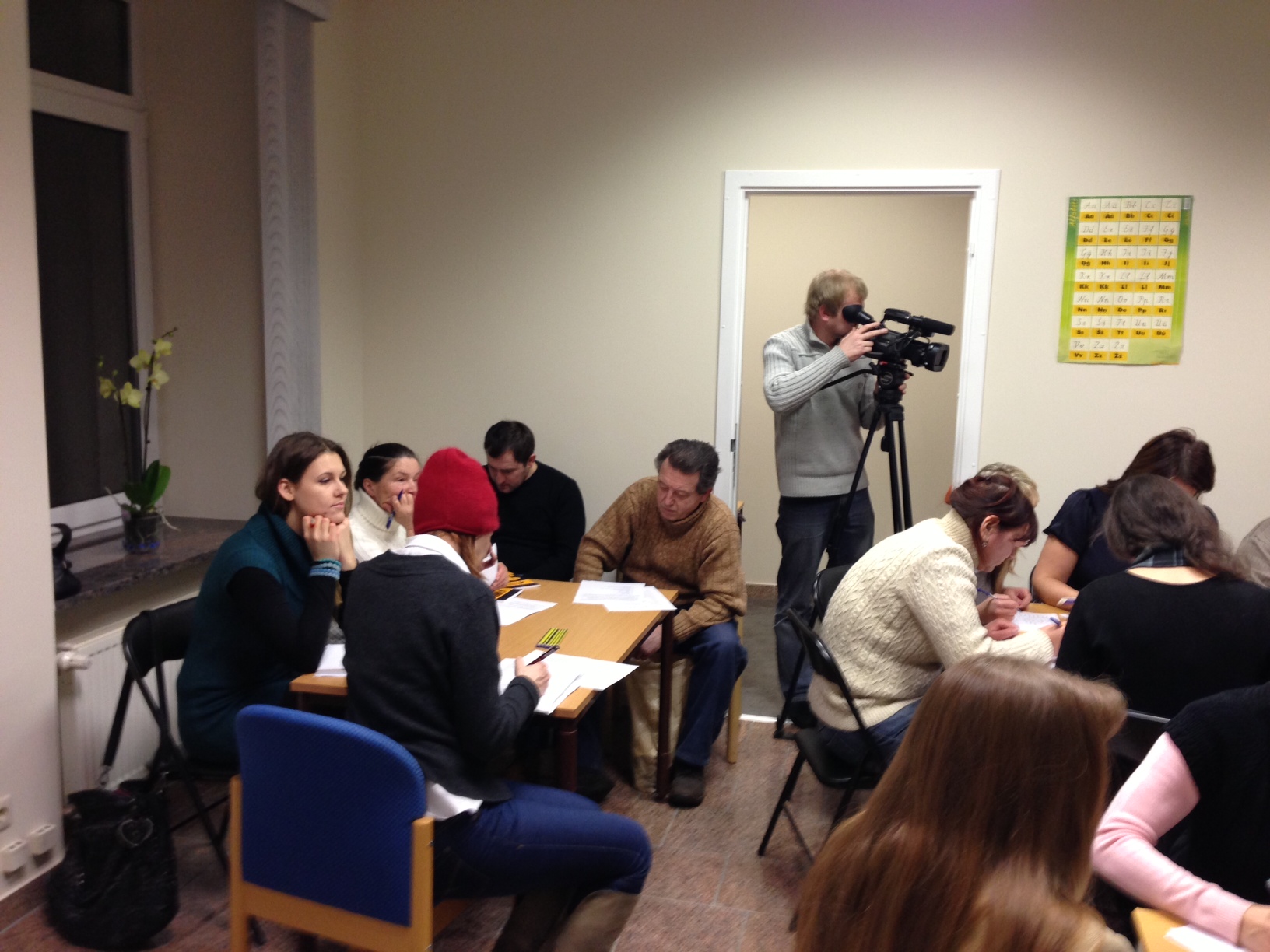
When learning a language it is vital to use it in practice as many people reach a psychological barrier once they need to speak to actual people. To solve this problem a Latvianconversational language club was organized.
To provide access to timely information a visualised integration resource was created which serves as a practical and informational platform to third country nationals who are planning to arrive in Latvia or are already here as well as those who want to help locals.
Work with third country nationals has proved that the most effective approach to solve social issues is to work through them individually which is why the target group of the project was provided with individual consultations with social workers and lawyers.
Based on the fact that women and small children are the most outcasted groups of third country nationals the project provided creative workshops intended for women with children where mothers and their children could unite in common activities. This allowed mothers to get out of the house, meet new people, be active and create interesting things. During this interaction between mothers and children “The Tasty ABC Book” was created which will allow children to learn the Latvian alphabet, culture, and traditions interactively providing an opportunity to learn the language early on. Whereas the mothers gained social and other skills and new contacts which increased this groups self-initiative, and motivation to take part in activities and self-help in the future.
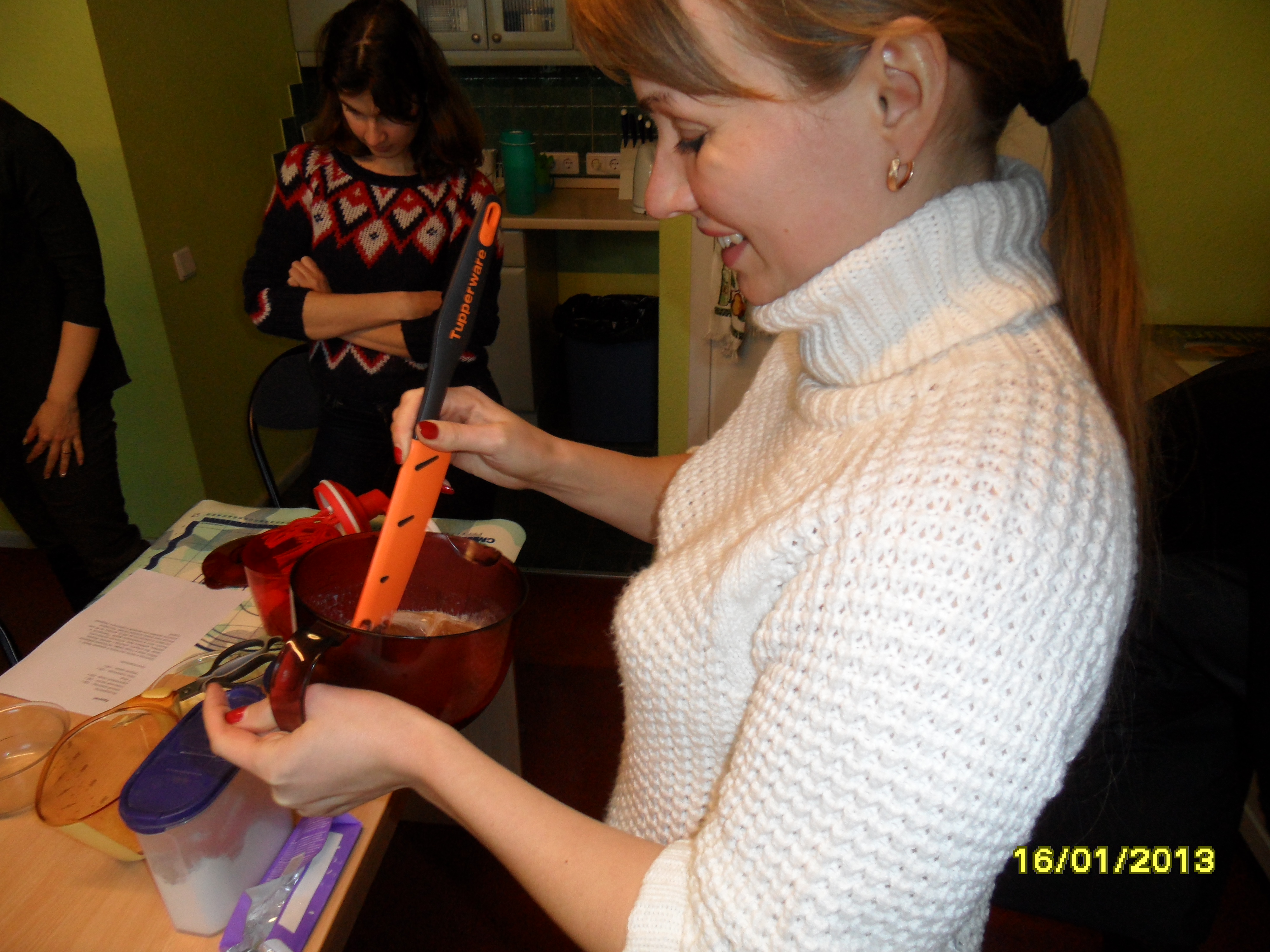
Support events for special third-country national groups – women and children, January 16
A Creative workshop in Valentine`s day spirits!
During the support group for women “For Each Other” which brought together third country nationals and Latvian women a specific support mechanism was created which was based on the principle of self-help where everyone has a chance to help others and get help themselves. This raised the self-esteem, ability to make a decision and participate in the processes of the society of each woman. Both of the workshops served as a tool to encourage the participants to speak Latvian thus increasing the motivation to continue learning the language.
Active opinions on various issues which affect immigrants were expressed and answers were gained from officials and NGOs during the informational activities – TV shows “Successful Ideas” (Veiksmīgas idejas) and information days in Riga, Liepāja and Olaine. That was an opportunity for third country nationals who are learning Latvian and participating in the creative workshops from three cities to meet and network. Whereas Spriditis School allowed to learn about the Latvian cultural environment, develop an intercultural dialogue and create standing values together with the project volunteers.

Information Day “Riču Raču” in Liepāja
Information Day “Riču Raču” in Olaine
During the project a visual material “Once a man was born” was created where 4 documentaries were shot which show life traditions and philosophies on birthdays of third country nationals living in Latvia. Birth is one of the things that unite people same as love, the word mother, and the desire to live and be happy. It carries unwritten yet understandable assumptions to any society – we are all alike. The movies serve as a visually emotional bridge between the nationally diverse people living in Latvia.
During the project volunteers took part in all activities and were an invaluable human resource. Volunteers were not only Latvian locals but also the third country nationals.
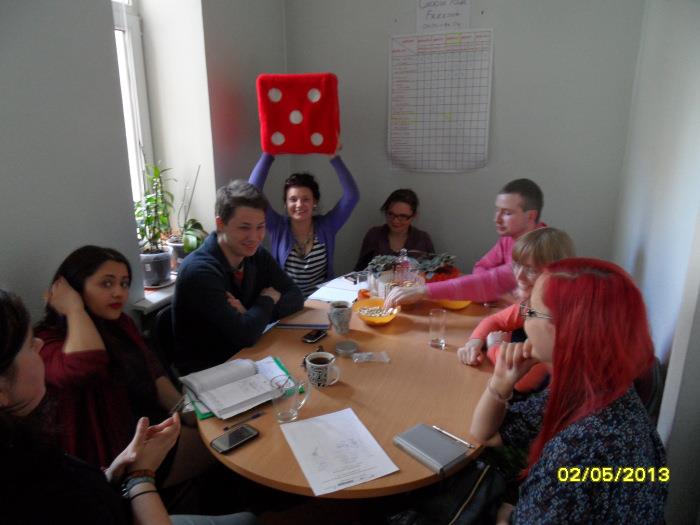
Volunteer training, 24.02.2013.
Volunteer training, 03.03.2013.
The Third Volunteer Training, March 17
To increase the capacity of NGO and develop cooperation a “Dialogue Platform” was created the task of which is to promote NGO cooperation to work with integration of immigrants issues.
The project is co-financed by the European Union. Implementation of the project Diverse Solutions for Public Education and Integration is co-financed by the European Fund for the Integration of Third-Country Nationals (75%) and state budget (25%). This publication is supported by the European Fund for the Integration of Third-Country Nationals. Responsibility for the content of this publication lies with the society “Shelter “Safe House””.

Integration projects have made it possible to ensure regular support for refugees
29.05.2013. Experts from the organisation “Shelter “Safe House”” are raising awareness of the joint closing event for the projects “Latvia – my home” and “Language – the path to integration II”, that were funded by the European Refugee Fund (ERF). Participants included refugees and their families, state and local government officials and other interested parties. The results of the projects were presented, and the target audience of the project shared their impressions.
“Unfortunately, state and local authorities can only provide low level and short-term support for refugees and persons granted subsidiary protection. Projects funded by the ERF make it possible to provide regular social, legal and psychological support for target groups,” says Sandra Zalcmane, the leader of the society “Shelter “Safe House””.
The project “Latvia – my home” provided refugees with skill development programmes, which included obtaining information about Latvia and available services, the social safety net in Latvia, employment, education, healthcare system, the role of non-governmental institutions in providing support for refugees and other topics they were interested in.
In parallel, the experts of the society have visited five local Latvian governments and provided training on the integration of refugees and persons granted subsidiary protection to more than 100 local government employees from Riga, Preili, Ogre, Sigulda and Salacgriva.
Gita Miruskina, the lawyer of the society: “The participants of the seminars think that the government`s attitude and the willingness to welcoming refugees is neutral or rather negative. Meanwhile, citizens were said to be have the most negative attitude towards welcoming refugees in municipalities. The main obstacles listed were the country`s overall economic situation, unemployment, tension in ethnic/national issues and lack of awareness of asylum issues. In the opinion of the employees, a change in attitude could be achieved by ensuring funding for refugee integration projects and educational and informative campaigns. The survey of the participants of the seminar showed that the public would be more accepting and open to gaining new knowledge and experience, if local governments were in regions. Meanwhile, the government of Riga has already been in contact with this target group and are aware of the workload. They recognised that any integration events require additional funding.”
One of the cornerstones of integrations is learning the Latvian language. “To help refugees and persons with subsidiary protection who have been granted asylum in Latvia to be a step closer to independent life, this september we continued the Latvian language courses started in previous years with the support of the ERF. This means that the target group had the possibility to continue the learning process with a familiar teacher. The language training is based on topics relevant to the target group, such as arranging formalities in Latvian, as well as introducing them to the history and culture of Latvia, in order to improve their understanding of Latvia and facilitate the development of a social network and integration in a new environment. The project included Latvian language classes and conversational club activities. The clients were being prepared for the national language exam and three of the clients used this opportunity and sat the exam. There were 31 people participating in the training. There were both diligent and less diligent listeners, but it has to be stressed that the desire and motivation to study is there. However, the problem is to sustain this level of motivation throughout the duration of the training,” says Alvis Skenders, head of the project “Language – the path to integration II”.
The ERF projects “Latvia – my home” and “Language – the path to integration II” started on the 1st September 2012 and finished on the 31st May 2013.
Project is financed by the EU. This publication is supported by the European Refugee Fund. Responsibility for the content of this publication lies with the society “Shelter “Safe House””.

The Informative Day in Olaine has Expanded Third-countries Nationals Social Contact Network
27.05.2013. Creative workshops, games, informative, educational events and activities dedicated to the integration of third-countries nationals in Latvia, it was all available on 25th of May to each and every inhabitant of Olaine and visitor of the Olaine region holiday. Third country nationals from Riga, Liepaja and Olaine took part in the event. This was already the second informative day "Riču raču" ("Ludo") organized within the project “Diverse Solutions for Public Education and Integration” by the non-governmental organization "Shelter "Safe House"" together with its cooperation partners “Centre for Public Policy PROVIDUS”, “Baltic Regional Fund” and “Riga Latvian Society”.
“The event was very sincere especially due to the fact that many have already got to know to each other and made friends in the Informative day in Liepaja. „Big thank you to the representatives of the Society as we had the opportunity not only to receive consultations of different specialists in Olaine, to create new contacts but also put into action new knowledge of Latvian in informal setting and to be able to get acquainted with the culture and inhabitants of Olaine” says Anna K, third country national, who has come to the event from Riga.
To ensure active participation of third country nationals and the society of Latvia in the integration process within the framework of “Diverse Solutions for Public Education and Integration” lessons of Latvian language and colloquial language are offered in three cities of Latvia – Riga, Olaine and Liepaja. Approximately 250 people attend the workshops.
Ludmila N., lives in Olaine and has come to Latvia from Odesa. She says: „In the courses is light and friendly atmosphere, it is pleasant to go to the courses. I definitely speak in Latvian better than before. If it would be possible to continue the course, I am sure that not only me but all our group would like to do that. In the end I want to live and work here. I think that it would be good if this Latvian colloquial language club would continue to exist, a place where in a nice, friendly atmosphere we can talk in Latvian and not to be afraid of making mistakes. Volunteers should be in such club – the people who know Latvian, who can help to hear our mistakes.”
“One of the reasons I am attracted to the course is the very nice atmosphere and possibility to contact to others, it is not so possible to enlarge your associates range in everyday life. We learned language also remembering different situations from childhood, school years – beautiful things that all of us have gone through and about which we have forgotten in everyday life.. it was a pleasure to return to childhood and youth. Can say that I have made friends in the courses,” says Boriss Ž, 45 years old, lives in Olaine.
Veronika K, lives in Liepaja, in Latvia lives since 1988: „I am happy that we train colloquial language in the courses; so far I have studied only grammar. The reason I like it is probably the very good teachers. It was useful, pleasant with good results. I would like to proceed studying if the courses would be free of charge. I think that language has to be learned constantly if there will be a few month pause now there will be a `fall` in the language too.”
Maya F few years ago got married to Latvian and moved to Liepaja from Singapore: “The courses were an opportunity for me to get new society and, of course, to begin learning Latvian systematically. Some people in Liepaja can explain something in English but mostly people are talking Latvian. Now at least I can ask in Latvian simple things in the market or a shop. I would like to proceed learning, that would really make fitting in the native life easier. I will definitely use the materials in MOODLE too”.
Special events in the project take place in a creative workshop intended for women with children, as well as in a self-help group “For Each Other” (“Viena otrai”).
In order to increase the level of awareness of third-country nationals, television programs for integration “Successful Ideas” (“Veiksmīgas idejas”), which are broadcasted every Sunday on LTV7, are offered.
Society “Shelter “Safe House”” in association with its partner association Centre for Public Policy PROVIDUS and Baltic Regional Fund has launched a new support project Diverse Solutions for Public Education and Integration*. It is aimed at developing diverse support, adaptation, and integration opportunities available to third-country nationals as well as engaging and educating Latvian society. Project period: December 19, 2012 – June 30, 2013.
The project is co-financed by the European Union.
Implementation of the project Diverse Solutions for Public Education and Integration is co-financed by the European Fund for the Integration of Third-Country Nationals (75%) and state budget (25%).
This publication is supported by the European Fund for the Integration of Third-Country Nationals. Responsibility for the content of this publication lies with the society “Shelter “Safe House””.

More Photos
About 100 third-country nationals with families visited the informative day in Liepaja
13.05.2013. This year, on 11th of May the informative day “Ricu Racu” (Riču Raču), which was organized by the association “Shelter “Safe House”” and its cooperation partners “Centre for Public Policy PROVIDUS”, “Baltic Regional Fund” and “Riga Latvian Society”, took place in Liepaja. Within the framework of this day, each and every inhabitant of Liepaja region was able to get acquainted with the culture of other countries, to learn what resources were created in Latvia for supporting foreigners providing the information about the services available in Latvia, as well as to receive consultations of different specialists and to participate in creative workshops and activities.
About 100 third-country nationals with families, who have been studying Latvian language and colloquial language within the framework of the project “Diverse Solutions for Public Education and Integration” already as of January, came from Riga and Olaine to visit this event.
“Provided possibilities of formally mastering official language of Latvia, as well as visiting Latvian towns, where one can feel confident and communicate in Latvian, gained the greatest popularity among the visitors of the event. Especially for this event, the volunteers of the association prepared activities for the children, during which little participants had an opportunity to express themselves, creating a work of art under the management of the artists. Many participants admitted that the event was very uniting; they did not feel great cultural differences between the nationalities. This impression was intensified by the game “Ricu Racu”, in which visitors of the event participated. We are happy for the successful event, but the greatest satisfaction was provided by an opportunity to directly and individually cooperate with the part of our society, which came from other countries, and to see that at the end of the day all people returned home feeling tired and having smiles on their faces, saying “thank you” in Latvian regardless of the origin, age, occupation or daily problems,” admits Reinis Grāvītis, coordinator of the volunteers of the association “Shelter “Safe House””.
On the 25th of May, within the framework of the Olaine region holiday the information day “Ricu Racu” will be organized in Olaine.
In order to strengthen Latvian cultural space as a society, particularly as a uniting foundation for third-country nationals, and to promote their affiliation to the cultural space on local, national and regional level, different activities, in which different ethnic groups, including third-country nationals, participate, have been organized within the project “Diverse Solutions for Public Education and Integration”.
The project is co-financed by the European Union.
Implementation of the project Diverse Solutions for Public Education and Integration is co-financed by the European Fund for the Integration of Third-Country Nationals (75%) and state budget (25%).
This publication is supported by the European Fund for the Integration of Third-Country Nationals. Responsibility for the content of this publication lies with the society “Shelter “Safe House””.
Social and legal issues are worked out within the framework of the project
05.04.2013. Specialists of the “Shelter “Safe House” – social workers and lawyers provided more than a hundred consultations regarding social and legal issues as of the start of the project “Diverse Solutions for Public Education and Integration” initiated last year on December 19. “Work, education, health care and social security, understanding of how these systems work is the most basic thing in order for an immigrant to be able to adapt to the Latvian society. Within the framework of the project, we endeavour to provide answers for all questions asked,” points a social worker Anita Udre (Anita Ūdre).
When providing answers to the questions of third-country nationals, the specialists mostly use their previous experience obtained in the course of many years, ensuring professional support for the immigrants; additional topical information is obtained from the internet resources and by contacting with responsible ministries or state and local government institutions.
Lawyer Gita Miruskina (Gita Miruškina): “As of the initiation of the project the greatest proportion of the consultations was related to labour law and employment. The clients are mostly consulted on issues concerning job search, employment relationships and foundation thereof, as well as concerning possible state support in case of unemployment. In matters of family law, the consultations have been provided on conclusion of marriage, determination of paternity, kinship, contractual property relations of the spouses, personal rights of the spouses. In matters of residence and immigration, the consultations have been provided on family reunion and immigration of parents and/or sisters, brothers to Latvia. The clients show interest in administrative process in state and local government institutions. These issues are topical (work, family, administrative issues), because the legal regulation of the aforementioned issues in client’s country of origin differs from the Latvian regulation.”
“Third-country nationals show interest in various legal matters,” concluded a project’s lawyer Alvis Skenders (Alvis Šķenders), who provides answers to questions related to determination of the residence status in the Republic of Latvia, issuance processes of a residence permit, documents to be submitted, amount of the state fee, purchase of property in Latvia in order to receive a residence permit. “The clients ask questions about crediting as well, including, fast loans and lists of debtors. Issues concerning commercial law are topical - foundation of firms, termination of activity, liquidation, accounting issues, issues concerning societies that would manage the joint property, registration of societies, refusal from the previous manager”.
Social workers’ target group of the project most often showed interest in possibilities to receive children’s allowance, pensions at the State Social Insurance Agency, as well as social assistance from the local government. Issues concerning health care and possibilities to receive state guaranteed health care and emergency assistance are topical. Lauma Jegere (Lauma Jēgere): “The questions are of practical nature – often enough we help to find necessary institutions responsible for particular competence. For example, Road Traffic Safety Directorate - the clients want to find out how to change the driver’s licence obtained in their countries of residence for driver`s licence of European Union. Placement of a child in the kindergarten is a topical issue for young parents. Great interest is showed in possibilities to master Latvian language free of charge. These issues are important for a person to feel balanced in both private and social life”.
In order to ensure active participation of third-country nationals and Latvian society in the integration process, learning of Latvian language and colloquial Latvian language is offered within the framework of the project in three Latvian cities – Riga, Olaine and Liepaja. 250 people are currently attending the training.
Special events in the project take place in a creative workshop intended for women with children, as well as in a self-help group “For Each Other” (“Viena otrai”).
In order to increase the level of awareness of third-country nationals, television programs for integration “Successful Ideas” (“Veiksmīgas idejas”), which are broadcasted every Sunday on LTV7, are offered.
In February and March, project volunteers from Riga, Olaine and Liepaja obtained knowledge and skills of team building, volunteer work and tolerance, conflict and time management in three training sessions. The training sessions were held by professional youth teachers from the organization Brīvprātīgais.lv.
In order to promote tighter cooperation between non-governmental organizations (NGO), which are working in the area of integration of immigrants, the first NGO dialogue platform meeting, which was organized by the Centre for Public Policy PROVIDUS, was held in March.
It is planned that starting from April the information days will be organized in regions and a visual material on common things between cultures will be created within the framework of the project “Diverse Solutions for Public Education and Integration”.
Society “Shelter “Safe House”” in association with its partner association Centre for Public Policy PROVIDUS and Baltic Regional Fund has launched a new support project Diverse Solutions for Public Education and Integration*. It is aimed at developing diverse support, adaptation, and integration opportunities available to third-country nationals as well as engaging and educating Latvian society. Project period: December 19, 2012 – June 30, 2013.
The project is co-financed by the European Union.
Implementation of the project Diverse Solutions for Public Education and Integration is co-financed by the European Fund for the Integration of Third-Country Nationals (75%) and state budget (25%).
This publication is supported by the European Fund for the Integration of Third-Country Nationals. Responsibility for the content of this publication lies with the society “Shelter “Safe House””.


In 2012 participation of society members in fighting human trafficking has quadrupled
Riga, February 5th 2013
The statistics of the NGO “Shelter “Safe House”” show that the number of cases of human trafficking reported by members of the society has increased four times. The highest activity was observed in the capital Riga as well as other larger cities of Latvia – Rezekne, Liepaja, Daugavpils and Valmiera. Altogether 106 persons have reached out for help to society “Shelter “Safe House”” via phone, electronically or in presence. Specialists provided assistance to 30 identified victims of human trafficking – 5 men and 25 women. In 16 cases persons had become victims of fictitious marriage, 7 – forced labour and 7 of sexual exploitation.
Sandra Zalcmane, chairperson, the society “Shelter “Safe House””: “In previous years the main informers about victims of human trafficking were Latvian embassies and the State Police of Latvia. In 2012 there has been a notable increase in participation of the society itself. We believe this result has been reached with regular preventive campaigns*. Analysing data we realised that the highest activity was from people in the five cities where the campaign “Sold Freedom” was implemented from August 2012 till February 2013. I think that in comparison to earlier years people are more informed now about the different forms human trafficking takes, can recognise them and are more active in telling about people who have got into trouble. The five municipalities where seminars took place within the framework of the campaign have taken a much more serious approach to solving problems with human trafficking. An interinstitutional cooperation model has been created to help such institutions as schools, social services, police, Orphans` Court among others to aid them in reaching a common goal.”
Specialists at the society “Shelter “Safe House”” note that the informative campaigns implemented in Latvia affect international processes too. During 2012 cooperation with Latvian embassies to Ireland, The United Kingdom, Germany, Belgium and Russia has much improved. The campaign has also attracted much attention from media in various Scandinavian countries.
Vija Busa, Counsellor, Deputy Head of Mission, and the Embassy of the Republic of Latvia to Ireland: „The effect of informational campaigns to prevent human trafficking cannot be denied. In many cases identified and potential victims of human trafficking that the embassy has come in contact with have admitted that they are aware of both human trafficking and fictitious marriages. Still the work devoted to prevent human trafficking in Latvia in not sufficient. The experience of the embassy shows that independently potential victims are not able to evaluate the possibility of coming to contact with human trafficking nor can they avoid getting involved in fictitious marriage and other forms of this slavery. Thus we hope that preventive work in Latvia will continue and more people will fully understand the devastating consequences of this modern day problem. The embassy also hopes for successful interinstitutional cooperation to prevent human trafficking after the changes to The Criminal Law of The Republic of Latvia take effect on the 1st of April this year.”
Institutions in the other Baltic States – Lithuania and Estonia – have expressed interest in Latvian work fighting against trafficking in human beings asking specialists from the society “Shelter “Safe House”” to visit to exchange experience in planning and implementing informational preventive campaigns.
With the support of Philip Morris International and EuroAWK from August 2012 till February 2013 preventive outdoor social advertising campaign “Sold Freedom” was implemented in five largest cities of Latvia. The goal of the campaign was to reduce the ever increasing trafficking in human beings informing and consulting citizens of Latvia and involving five municipalities.
In the end of 2012 the society “Shelter “Safe House”” in association with Latvian Irish National Council carried out an informational campaign against human trafficking in Dublin airport. In this campaign passengers arriving to Ireland from Latvia were informed about two forms of human trafficking – fictitious marriage and forced labour. During the visit in Ireland specialists from the society “Shelter “Safe House”” also met with Ambassador of the Republic of Latvia to Ireland Pēteris Kārlis Elferts; Vija Busa Counsellor, Deputy Head of Mission, the Embassy of the Republic of Latvia to Ireland; Sarah Benson, CEO of Ruhama; Nusha Yonkova, Anti-Trafficking Project Coordinator, Immigrant Council of Ireland. During this meeting parts exchanged experience and discussed possible solutions for future cooperation.
Press Release
Third-country nationals are welcome to take part in integration activities
15.01.2013. In order to develop and improve diverse support, adaptation, and integration opportunities available to third-country nationals society “Shelter “Safe House”” in association with its partner association Centre for Public Policy PROVIDUS and Baltic Regional Fund launched a new support project: Diverse Solutions for Public Awareness and Integration in December 2012. Project period: December 19, 2012 – June 30, 2013.
The project includes the following training and activities for third-country nationals:
- Latvian standard and conversational language course. The course is held in 3 Latvian cities –Riga, Olaine, andLiepaja. Duration – 6 months. Language learning will also use Moodle environment – a specially organized e-learning course which uses various (text, audio/video etc.) electronic study aids, communication and self-testing features available on the Internet.
- Chance to receive social worker consultations and legal aid as well as practical support in solving various daily issues, including cooperation among health care, pre-school institutions and facilities for compulsory education and clients, help in legal proceedings, employment matters, migration issues, business start-up matters, legalization and recognition of educational documents, other issues.
- Support events for special third-country national groups – women and children. Plans include thematic, practical lesson series for children with parents including practical thematic cooking lessons on a weekly basis. The programme is aimed at developing support resource for third-country nationals – mothers with small kids and uses interactive teaching approach to facilitate active cooperation between the kid and mother, engagement and informal Latvian language learning.
- Participation in self-help group For Each Other will give third-country nationals – women the chance to meet other third-country nationals participating in the project and Latvian women thus encouraging socialization and wish for active participation among immigrant women.
- Awareness days Rica Racu (Riču Raču) in Liepaja and Olaine. Latvian standard language course and Latvian conversational language club members from all project sites, kids’ and parents’ creative workshops and mother self-help group members will take part in activities and within the framework of awareness day will meet other city residents – third-country nationals, take part in Spriditis School (Sprīdīša skola) events organized by volunteers and Riga Latvian Society.
- Participation in volunteer activities. In order to plan sustainability of project activities and develop a broad support network for third-country nationals in Riga, Liepaja, and Olaine volunteer movement will be developed in association with organization brivpratigais.lv (brīvprātīgais.lv).
Earliest activity dates:
January 16at 12:00 – Support events for special third-country national groups: women and children
Address: Riga, Brivibas iela 204, Tupperware office
January 21at 17:00 – Latvian language course, 1st class
Address: Riga, Lacplesa iela 41, block 2 (4th floor)
January 21 at 20:00
Latvian language course, 1st class
Address: Olaine, Zemgales iela 31, Olaines Pieaugušo izglītības centrs
January 29 at 17:00
Latvian language course, 1st class
Address: Liepaja, Liela iela 14, Liepājas universitāte
For more information and to register applications for participation in project activities contact:
Society “Shelter “Safe House””
Contact person: Gunta Viksne (Gunta Vīksne)
Tel: (+371) 67898343, (+371) 29180450
Email: drosa.maja@apollo.lv
Address: Riga, Lacplesa iela 41, block 2
Society has been implementing projects such as Multidisciplinary Support System for Third-Country Nationals, Raising Competence of Social Workers at Municipalities, Societies, and Foundations for Work with Third-Country Nationals (2011), Meeting Space (2009) since 2009. They were aimed at ensuring operation of resource centre for immigrants, arranging and supplying practical help to refugees and persons with alternative status, including Latvian language learning, social psychological and adaptation services by offering legal advice, consultations with social workers and other specialists, developing informative materials and facilitating public awareness of immigrant integration.
The project is co-financed by the European Union.
Implementation of the project Diverse Solutions for Public Education and Integration is co-financed by the European Fund for the Integration of Third-Country Nationals (75%) and state budget (25%).
This publication is supported by the European Fund for the Integration of Third-Country Nationals. Responsibility for the content of this publication lies with the society “Shelter “Safe House””.
Press Release
Project for the Support and Integration of Third-Country Nationals Has Been Launched
Riga, 19.12.12. Society “Shelter “Safe House”” in association with its partner association Centre for Public Policy PROVIDUS and Baltic Regional Fund has launched a new support project Diverse Solutions for Public Education and Integration*. It is aimed at developing diverse support, adaptation, and integration opportunities available to third-country nationals as well as engaging and educating Latvian society. Project period: December 19, 2012 – June 30, 2013.
In order to ensure active involvement of third-country nationals and Latvian society in the integration process the project will apply various methods and offer Latvian standard and conversational language learning by engaging active volunteers based in Latvia. Training will be conducted in Moddle environment, web resources for integration will be visualized, social services and legal advice will be supplied. Plans include special events for women with children in a creative workshop and self-help group. In order to raise awareness of third-country nationals TV shows for integration will be offered, awareness days will be organized across regions and visual material on aspects in common among cultures will be developed. The project will draw volunteers and develop a dialog platform among institutions.
Since 2009 the society has been implementing various projects** aimed at ensuring operation of a resource centre for immigrants, including Latvian language learning, social psychological and adaptation services by offering legal advice, consultations with social workers and other specialists, developing informative materials and facilitating public awareness of immigration.
*Activities planned within the framework of the project match a few points included in policy planning document: Guidelines on National Identity, Civil Society, and Integration Policy 2012 - 2018.
** Multidisciplinary Support System for Third-Country Nationals, Raising Competence of Social Workers at Municipalities, Societies, and Foundations for Work with Third-Country Nationals (2011), Meeting Space (2009).
The project is co-financed by the European Union.
Implementation of the project Diverse Solutions for Public Education and Integration is co-financed by the European Fund for the Integration of Third-Country Nationals (75%) and state budget (25%).
This publication is supported by the European Fund for the Integration of Third-Country Nationals. Responsibility for the content of this publication lies with the society “Shelter “Safe House””.
| |
 |
|
|
 |
|
|
Press release
INTERNATIONAL CONFERENCE: PRACTICAL EXPERIENCE FROM WORK WITH REFUGEES SHOULD BE USED FOR THE DEVELOPMENT OF NATIONAL INTEGRATION PROGRAMMES
Riga, 24.05.2011. Although the Baltic States are far from the rebellious regions, the increase in the number of asylum seekers is becoming more and more pronounced. Since Latvia, Lithuania, and Estonia are neighbouring countries, they seek similar approaches to the resolution of various issues. In order to find the most successful solution for refugee integration, an international conference ‘Asylum: What It Means in Latvia, Lithuania, and Estonia?’ („Patvērums – ko tas nozīmē Latvijā, Lietuvā un Igaunijā?”) was organized on May 19 by the Shelter ‘Safe House’ (Patvērums „Drošā māja”), a nongovernmental organization, the Soros Foundation - Latvia under the project `Help Me Stay in Latvia!` („Palīdzi man palikt Latvijā!”), and European Refugee Fund (ERF) under the project `I am staying in Latvia!` („Es palieku Latvijā!”) in association with the Ministry of Foreign Affairs. It was aimed at exploring the current situation in Lithuania, Estonia, and Latvia as well as answering the following questions: Is there an integration programme for refugees who have been granted the right to stay in the country? Are the Baltic States ready to shelter refugees from other countries or not?
Alvis Skenders (Alvis Šķenders), Board Member of the Shelter ‘Safe House’ said: “According to the information provided during the conference, integration issues are similar across the Baltic States. Lithuanians are one step ahead, though, as they have been working with actual integration programmes since 1997.”
Alfredas Nezabitauskas, representative of the Refugee Reception Centre said that “in Lithuania the leading institution for integration is the Refugee Centre, however, support in integration matters is also provided by the local municipalities. In Lithuania rights and obligations regarding refugee integration have been defined and distributed between the public and municipal bodies. Nevertheless there are problems - asylum seekers are very poorly motivated to learn Lithuanian, therefore it is necessary to consider contributing financial resources to the state language studies.”
Whereas Juhan Saharov, Estonian colleague from NGO ‘Johannes Mihkelson Centre’ listed the main problems as being “the lack of the refugee integration programme, low awareness level of refugees in the local residents, small numbers of staff as well as geographical location of the centre - it is 200 kilometres away from the capital. Johannes Mihkelson Centre provides support to the asylum seekers and continues its work with refugees. It helps achieve better results in integration. Motivation is a topical issue in Estonia as well - how to encourage asylum seekers and refugees to learn Estonian, cooperate with the institutions providing help.”
As the most important conclusion for Latvia A. Skenders stresses: “It is essential to ensure continuity and succession of integration measures. The current funding model makes us interrupt the support activities already underway aimed at refugees and persons holding alternative status because there is a gap of two to eleven months between project implementation. Thus clients lose support and become hopeless and depressed. In order to improve the situation, we offer knowledge acquired during three years of work of the Shelter `Safe House` so that the Latvian state could develop a refugee integration programme as soon as possible.”
During the regional seminars organized by ERF its experts have come to the conclusion that in Latvia, generally, there are very different views on refugees or no awareness at all. Therefore a lot of work is needed to ensure information on the integration opportunities for immigrants in Latvia.
According to the data gathered by the Office of Citizenship and Migration Affairs, the overall number of applicants for asylum in Latvia this year is 70, 1 was granted a refugee status, and 6 more - an alternative status. For comparison: since 1998 the total number of applicants for asylum in Latvia has been 437, of them 30 were granted a refugee status and 51 - an alternative status. Last year Latvia also sheltered five minors who entered Latvia without an adult escort.
According to the data shared by the Ministry of the Interior of Estonia, since 1997 the overall number of applicants for asylum in Estonia has been 206, including 36 in 2009, 30 in 2010 and as many as 20 in 2011 (as at 30.04.2011). Asylum seekers mostly come from Russia, Afghanistan, Iraq, Turkey, Belarus, and Georgia.
About the society „Shelter „Safe House””
The society “Shelter “Safe House”” was established on August 6, 2007 with the aim to develop support services to victims of human trafficking, legal immigrants, including asylum seekers, refugees and persons granted subsidiary protection status by ensuring the individual’s right to receive adequate assistance and defense; promoting rehabilitation and reintegration of victims of human trafficking into the society; creating interactive forms of training, and expanding cooperation with state and local government institutions, public and Christian organizations in Latvia and worldwide.
The NGO “Shelter “Safe House”” has acquired the right to provide state financed social rehabilitation services to victims of human trafficking.
2010th The Society received the Latvian Ministry of Interior of the Republic of gratitude for the important work of human trafficking prevention and control.
In January 2011 "Shelter "Safe House"" received the first time ever presented Ambassador`s Award for Innovation in Service. The award was presented by the Ambassador of the United States of America to Latvia Judith G. Garber. In March "Shelter "Safe House"" received an appreciation award from the Society integration Foundation of Latvia for emphasizing the social issues, as well for making contribution to work with asylum seekers and refugees.
_________________________________________________________________________
| |
|
|
Teadaanne meediavahenditele
RAHVUSVAHELINE KONVERENTS: PRAKTIKAS OMANDATUD KOGEMUSI TÖÖTAMISEL PÕGENIKEGA SAAB ÄRA KASUTADA RIIKLIKU INTEGRATSIOONIPROGRAMMI VÄLJATÖÖTAMISEL
Riia, 24.05.2011. Ehkki Balti riigid asuvad kaugel rahutustest haaratud piirkondadest, sellegipoolest üha tuntavam on varjupaigataotlejate arvu kasv. Kuna Läti, Leedu ja Eesti on naaberriigid, otsivad nad paljude küsimuste lahendamiseks sarnaseid lähenemisviise. Selleks, et leida kõige edukamat lahendust põgenike integratsiooni alal, valitsusväline organisatsioon „Varjupaik „Drošā māja”(Turvaline kodu), „Sorose fond Lätis” projekti „Aita mul jääda Lätisse!” ja Euroopa Põgenike fondi (EPF) projekti „Ma jään Lätisse!” raames, Välisministeeriumi toetusel käesoleva aasta 19. mail korraldas rahvusvahelise konverentsi „Varjupaik – mida see tähendab Lätis, Leedus ja Eestis?”. Selle eesmärgiks oli teadvustada reaalset olukorda Leedus, Eestis ja Lätis, aga samuti ka vastata alljärgnevatele küsimustele: kas põgenike jaoks, kes on saanud õiguse jääda riiki, on loodud integratsiooniprogramm? Kas Balti riigid on või ei ole valmis – vastu võtma põgenikke teistest riikidest?
Alvis Škenders, „Varjupaik „Drošā māja”(Turvaline kodu)” juhatuse liige: „Konverentsil esitatud informatsioon peegeldas fakti, et integratsiooniprobleemid kõigis Balti riikides on sarnased. Tõesti, leedulased on sammu võrra ees, kuna töötavad reaalsete integratsiooniprogrammide kallal juba alates 1997. aastast”.
Alfredas Nezabitauskas, Põgenike vastuvõtmise keskuse esindaja jutustas, et „juhtiv integratsiooni-alane ametiasutus Leedus on Põgenike majutuskeskus, aga toetust integratsiooniküsimustes osutavad ka omavalitsused. Leedus on määratletud ning jaotatud nii riigi- kui ka omavalitsus-asutuste kohustused ja õigused, mis on seotud põgenike integratsiooniga. Sellegipoolest on olemas ka probleeme – varjupaiga otsijate motivatsioon õppida leedu keelt on väga madal, seoses sellega on vajalik kaaluda riiklike vahendite kasutamist riigikeele õpetamiseks”.
Omakorda eesti kolleeg Juhan Saharov VVO „Johannes Mihkelson Centre” nimetas põhiprobleemina põgenike integratsiooniprogrammi puudumist, vähest põgenikest arusaamist kohalike elanike keskel, keskuse töötajate piiratud arvu, aga samuti ka keskuse geograafilist asukohta – see asub 200 kilomeetrit pealinnast. „Johannes Mihkelson Centre”* osutab abi varjupaiga otsijatele ning jätkab juba alustatud tööd põgenikega. See võimaldab saavutada paremaid tulemusi integratsiooni alal. Ka Eestis on aktuaalne motivatsiooni küsimus – kuidas ergutada varjupaigaotsijaid ja põgenikke õppima eesti keelt, tegema koostööd abi osutavate ametkondadega.”
Kõige tähtsama järeldusena Läti jaoks A. Škenders rõhutas: „On väga oluline tagada integratsioonimeetmete katkematust ja järjepidevust. Praegune rahastamismudel sunnib katkestama alustatud tugitegevused põgenikega ja isikutega, kel on alternatiivne staatus, kuna projektide elluviimise vahel on paus, mis kestab kahest kuni üheteistkümne kuuni. Seoses sellega klientidel kaob toetus ning ilmnevad lootusetus ja depressioon. Selleks, et sellist olukorda parandada, pakume „Varjupaik „Drošā māja”(Turvaline kodu)” kolme aasta jooksul praktikas omandatud teadmisi selleks, et Läti riik võimalikult kiiresti võiks luua põgenike integratsiooniprogrammi.”
EBF poolt korraldatud seminaridel spetsialistid on täheldanud, et Lätis üldiselt on väga erinevad seisukohad põgenike kohta või siis sellist arusaamist üldsegi ei ole. Seoses sellega tuleb teha suurt tööd selleks, et tagada informatsiooni kättesaadavus immigrantide integratsioonivõimalustest Lätis.
Kodakondus- ja migratsiooniameti poolt esitatud andmete kohaselt, ühtekokku on käesoleval aastal palunud Lätisse varjupaika 70 isikut, ühele isikule on omistatud põgeniku, ning veel kuuele – alternatiivne staatus. Võrdluseks: ühtekokku, alates 1998. aastast, on Lätis varjupaika palunud 437 isikut, neist 30 isikule on omistatud põgeniku staatus ning 51 isikut on saanud alternatiivse staatuse. Mullu Läti võttis vastu ka viis alaealist isikut, kes olid Lätisse saabunud ilma täiskasvanust saatjata.
Eesti Siseministeeriumi poolt esitatud andmete kohaselt, alates 1997. aastast, varjupaika Eestis olid palunud 206 isikut, sealhulgas 2009. aastal – 36, 2010. aastal – 30 ja 2011. aastal – juba 20 (30.04.2011.seisuga). Varjupaigaotsijate seas on kõige enam isikuid Venemaalt, Afganistanist, Iraagist, Türgist, Valgevenest ja Gruusiast.
Ühingu „Varjupaik „Drošā māja”(Turvaline kodu)” kohta
Ühing „Varjupaik „Drošā māja”(Turvaline kodu)” on asutatud 2007. aasta 6. augustil, eesmärgiga arendada tugiteenuseid inimkaubanduses kannatada saanud isikutele, legaalsetele immigrantidele, sealhulgas varjupaiga taotlejatele, põgenikele ja isikutele, kellele on omistatud alternatiivne staatus, tagades indiviidi õigust saada vastavat abi ning kaitset; edendades inimkaubanduses kannatanud isikute rehabilitatsiooni ja reintegratsiooni ühiskonda; tagades tugiteenuseid legaalsetele immigrantidele, sealhulgas varjupaiga taotlejatele, põgenikele ja isikutele, kellele on omistatud alternatiivne staatus; luues interaktiivseid õppevorme ning arendades koostööd riiklike ning omavalitsus-ametiasutustega, ühiskondlike ning kristlike organisatsioonidega Lätis ning maailmas. 2010. aasta septembris ühing sai heategevus-alase staatuse. VVO „Varjupaik „Drošā māja”(Turvaline kodu)” on ainuke organisatsioon, mis alates 2007. aastast on saanud õiguse osutada riigi poolt tasutavaid sotsiaalse rehabilitatsiooni teenuseid inimkaubanduse ohvritele, ning jätkab alustatut ka 2011. aastal.
2010. aastal „Varjupaik „Drošā māja”(Turvaline kodu)” sai Läti Vabariigi Siseministeeriumi Tänukirja märkimisväärse töö eest inimkaubanduse ärahoidmisel ja selle vastu võitlemisel.
2011. aastal jaanuaris anti ühingule üle Läti USA saatkonna autasu „Innovatiivse töö eest ühiskonna hüvanguks”, omakorda märtsis omistati Ühiskonna integratsioonifondi edendamise auhind sotsiaalala problemaatika aktualiseerimise eest ühiskonnas ning panuse eest töös varjupaiga otsijatega ning põgenikega.
Ühing aktualiseerib sotsiaalala problemaatikat ühiskonnas ning massimeedia vahendites, töötab teiste VVO, riigi ja omavalitsuste aktiivse koostööpartnerina. Ühing teguseb ka Läti Naiste valitsusväliste organisatsioonide koostöövõrgustiku raames. Lähem informatsioon www.patverums-dm.lv
Baiba Bieza (informatsioon inglise keeles) +371 29474099, drosa.maja@gmail.com; Rasa Salina (informatsioon läti ja vene keeles), tel. +371 67472590, +371 67898343, mob. +371 20380680, e-post: rasa.salina(at)gmail.com,drosa.maja@apollo.lv
___________________________________________________________________
| |
|
|
Pranešimas žiniasklaidai
TARPTAUTINĖ KONFERENCIJA: PRAKTIKOJE ĮGYTA PATIRTIS DARBE SU PABĖGĖLIAIS NAUDOJAMA VALSTYBINIŲ INTEGRACIJOS PROGRAMŲ KŪRIMUI
Ryga 2011.05.26. Nors Baltijos valstybės yra toli nuo neramumų paliestų regionų, bet vis labiau jaučiamas prieglobsčio ieškotojų skaičiaus didėjimas. Kadangi Latvija, Lietuva ir Estija – kaimyninės valstybės, daugelyje klausymų jų požiūris panašus. Tam, kad rasti sėkmingiausią sprendimą pabėgėlių integracijos srityje, nevalstybinė organizacija „Prieglobstis „Saugūs namai””, „Soroso fondas – Latvija” projekte „Padėk man likti Latvijoje!” ir Europos Pabėgėlių fondo (EPF) projekte „Aš pasilieku Latvijoje!”, remiama Užsienio ministerijos šių metų gegužės 19 d. surengė tarptautinę konferenciją "Prieglobstis – ką tai reiškia Latvijoje, Lietuvoje ir Estijoje?". Jos tikslas buvo apžvelgti realią situaciją Lietuvoje, Estijoje ir Latvijoje, bei rasti atsakymus į tokius klausymus: ar pabėgėliams, kuriems suteiktos teisės likti valstybėje, yra sukurta integravimosi programa? Ar Baltijos valstybės yra/nėra pasiruošusios priimti pabėgėlių iš kitų valstybių?
Alvis Škenders, „Prieglobstis „Saugūs namai”” valdybos narys: „Konferencijoje pateikta informacija atspindėjo faktą, kad integracijos problemos visose Baltijos valstybėse yra panašios. Tiesa, lietuviai yra žingsnelį priekyje, nes su realiomis integracijos programomis dirba jau nuo 1997 metų”.
Alfredas Nezabitauskas, Pabėgėlių centro atstovas papasakojo, kad „pagrindinė integracijos įstaiga Lietuvoje – tai Pabėgėlių integracijos centras, bet paramą integravimo klausimais teikia ir savivaldybės. Lietuvoje yra apibrėžtos bei padalintos valstybės ir savivaldybių įstaigų pareigos, susijusios su pabėgėlių integravimu. Bet yra ir problemų – prieglobsčio ieškančių žmonių motyvacija mokytis lietuvių kalbos labai žema, todėl reikėtų įvertinti finansinių lėšų panaudojimą valstybinės kalbos mokymui”.
O Estijos kolega Juhanas Saharovas iš nevalstybinės organizacijos „Johannes Mihkelson Centre” kaip pagrindinės problemas įvardijo pabėgėlių integracijos programos nebuvimą, vietinių gyventojų neteisingą požiūrį į pabėgėlius, centro darbuotojų trūkumą, taip pat ir geografinę centro padėtį – jis yra 200 km nuo sostinės. „Johannes Mihkelson Centre”* teikia paramą prieglobsčio prašantiems ir tęsia pradėtą darbą su pabėgėliais. Tai leidžia pasiekti geresnius rezultatus integracijos srityje. Ir Estijoje aktualus motyvacijos klausimas – kaip paskatinti pabėgėlius mokintis estų kalbą, bendradarbiauti su pagalbą teikiančiomis institucijomis.”
Kaip svarbiausią išvadą Latvijai A. Škenderis nurodė: „Labai svarbu užtikrinti integravimo priemonių nenutrūkstamumą, tęstinumą. Dabartinis finansavimo modelis priverčia nutraukti pradėtus darbus su pabėgėliais ir alternatyvaus statuso asmenimis, nes tarp projektų įdiegimo būna dviejų – vienuolikos mėnesių pertraukų. To pasėkoje klientai prarandą paramą, atsiranda beviltiškumo jausmas bei depresija. Tam, kad pagerinti šią situaciją, siūlome „Prieglobstis „Saugūs namai”” trejų metų praktikos metu gautas žinias, kad Latvijos valstybė kuo galima greičiau galėtų sukurti pabėgėlių integravimo programą.”
Europos pabėgėlių fondo rengiamuose seminaruose organizacijos specialistai priėjo išvadų, kad Latvijoje į pabėgėlius yra visai kitoks požiūris arba tokio iš viso nėra. Todėl reikia daug dirbti ir užtikrinti informacijos gausą apie imigrantų galimybėmis Latvijoje.
Pagal Pilietybės ir migracijos valdybos teikiamus duomenis, šiemet Latvijoje prieglobsčio prašė iš viso 70 asmenys, vienam asmeniui suteiktas pabėgėlio, o šešiems – alternatyvus statusas. Palyginimui: iš viso nuo 1998 metų prieglobsčio Latvijoje prašė 437 asmenys, iš jų 30 asmenims skirtas pabėgėlio statusas, o 51 gavo alternatyvų statusą. Praeitais metais Latvija priėmė ir penkis nepilnamečius asmenis, kurie į Latviją atvyko be suaugusiųjų.
Pagal Estijos Vidaus reikalų ministerijos teiktus duomenis, nuo 1997 metų prieglobsčio Estijoje prašė 226 asmenys, tame tarpe 2009 metais – 36, 2010 metais – 30 ir 2011 metais – jau 20 (2011-04-30). Tarp prieglobsčio prašančiųjų daugiausiai yra asmenų iš Rusijos, Afganistano, Irako, Turkijos, Baltarusijos ir Gruzijos.Apie „Prieglobstis „Saugūs namai””
Organizacija „Prieglobstis „Saugūs namai”” įsteigta 2007 metų rugpjūčio 6 d. su tikslu vystyti paramos paslaugas nukentėjusiesiems nuo žmonių prekybos asmenims, legaliems imigrantams, įskaitant prieglobsčio prašantiems, pabėgėliams ir asmenims, kuriems skirtas alternatyvus statusas, užtikrinant individo teises gauti atitinkamą pagalbą ir apsaugą; skatinant žmonių prekyboje nukentėjusiųjų žmonių reabilitaciją ir reintegraciją, užtikrinant paramos paslaugas legaliesiems imigrantams, įskaitant prieglobsčio prašantiems, pabėgėliams ir asmenims, kuriem skirtas alternatyvus statusas; kuriant interaktyvias apmokymo formas, ir vystant bendradarbiavimą su valstybinėmis ir savivaldybių institucijomis, visuomeninėmis ir krikščioniškomis organizacijomis Latvijoje ir pasaulyje. 2010 metų rugsėjo mėn. bendrija gavo visuomeninės gerovės statusą. Nevyriausybinė organizacija „Prieglobstis „Saugūs namai”” – vienintele organizacija, kuriai nuo 2007 metų yra suteiktos teisės teikti valstybės apmokamas socialinės reabilitacijos paslaugas žmonių prekybos aukoms ir tęs pradėtą darbą ir 2011 metais.
2011 metų sausio mėn. bendrijai suteiktas JAV ambasados Latvijoje apdovanojimas „Už inovatyvų darbą visuomenės naudai”, o kovo mėn. buvo suteiktas Visuomenės integracijos fondo skatinimo prizas už socialinės srities problemų aktualizavimą visuomenėje ir už indėlį dirbant su prieglobsčio ieškančiais ir pabėgėliais.
Bendrija aktualizuoja socialinės problemas visuomenėje ir žiniasklaidoje, aktyviai bendradarbiauja su kitomis nevyriausybinėmis organizacijomis, valstybė ir savivaldybes. Bendrija veikia ir Latvijos Moterų nevyriausybinių organizacijų bendradarbiavimo tinkle. Daugiau informacijos rasite www.patverums-dm.lv
Rasa Saliņa (informacija latvių ir rusų kalbomis), tel. +371 67472590, +371 67898343, mob. +371 20380680, el. paštas: rasa.salina@gmail.com, drosa.maja@apollo.lv
Baiba Biezā (informacija anglų kalbą) +371 29474099, drosa.maja@gmail.com;
| |
|
|
NGO Shelter Safe House on 19 May organize an international conference Shelter -what does it mean in Latvia, Lithuania and Estonia
NGO “Shelter “Safe House””, which actualizes the society of the social sphere, acts as an active partner of other NGOs, state and municipality, under the Soros Foundation Latvia in Riga "Help me to stay in Latvia!" and the project of the European Refugee Fund (EBF) « I`m staying in Latvia", supported by the of Foreign Affairs, on 19 May in Riga, at Kr. Valdemara street 3, in the conference hall of the Ministry of Foreign Affairs will organize an international conference "Shelter -what does it mean in Latvia, Lithuania and Estonia?". Discussions will be about the integration of immigrants and refugees in the Baltic countries. The conference is planned to include representatives of Estonia, Latvia, Lithuania and international institutions, for a total of 50 persons. The working languages of the conference will be Latvian, English and Russian.
During the conference from 10:00 to 15:10 will listen reports on the experiences of public and private sectors of the Baltic countries in the integration of refugees, as well as on global trends and issues. Panel discussion will be about the general and excellent between the countries in the integration of refugees and generalize it, what issues will need to work in the future so that we could speak about the long-term integration.
Registration to the conference is possible till 17 May, 2011 till 17:00 by sending to e-mail: rasa.salina(at)gmail.com
________________________________________________________________________
Media Announcement
Regular Prevention Activities and Immediate Changes Needed Into Latvian Criminal Law to Fight Trafficking in Persons
Riga, January 19, 2011. Today NGO “Shelter „Safe House”” held a press conference to announce that immediate changes are needed into Latvian Criminal Law to allow prosecution of marriage brokers. “Shelter „Safe House”” is the only organization that starting from 2007 has had the authority to provide state funded rehabilitation services for trafficking victims. The organisation representatives advised that under the circumstances of growing human trafficking problem not only NGOs but also private businesses work jointly with state and local authorities to address the issue.
„Under the current Latvian law, brokers arranging sham marriages with third country nationals and sending women to other states for this purpose can be prosecuted only if the activity involves fraud, threats, or force. If the woman is aware and consents to a sham marriage instead of a real job before her travel to another state, there is no punishment prescribed to the recruiter by the Criminal Law. Therefore, it is necessary to immediately start a discussion about changing the Criminal Law and allow prosecution of sham marriage brokers. This will protect Latvia and other EU member states from growing risks presented by illegal immigration and trafficking in persons. It is important to understand that trafficking in persons is, first of all, an organized business activity involving crime groups,” noted the Director of Interior Ministry’s Department for Policy Development Dimitrijs Trofimovs who also is the National Anti-Trafficking Programs Coordinator.
According to the information by Irish Ministry of Justice, in nine months of 2010, a total of 1487 third country nationals have applied for Irish residency permits on the bases of marriages with nationals of EU member states. 286 of those, were applications from Pakistani nationals (128 Pakistani nationals had concluded marriages with Latvians). A total of 293 applications for Irish residency permits were received from third country nationals who had married Latvians.
According to the information by the Ministry of Foreign Affairs, in 2009, a total of 257 Latvians in Ireland registered marriages with Pakistanis; 80 Latvians registered marriages with Indians, 20 – with nationals of Bangladesh, Nigeria, Afghanistan, Egypt, Iraq, Syria and other states. In 2010, a total of 143 Latvians in Ireland registered marriages with Pakistanis, 37 Latvians registered marriages with Indians, 17 – with nationals of Bangladesh, 11-with Nigerians.
3rd Secretary of the Consular Department of the Latvian Ministry of Foreign Affairs Santa Dalmane advised that „ in general, you can say that the number of marriages between Latvian nationals and third country nationals in Ireland has reduced. This is thanks to cooperation from the Irish authorities at the request by the Ministry of Foreign Affairs that resulted in stricter bureaucratic measures in relation to marriage registration procedures staring from late 2010 (requirements for statements on applicant’s family status, document authentication, etc.). It is obvious that the preventive outreach campaigns have also been effective.
We have information from our embassies abroad that in most of the last year’ s cases Consular assistance requests were filed by Latvian women whose passports were taken away by their fictitious husbands to ensure that the Latvian wife would be unable to leave the country before the residency permit is granted. There have also been registered reports from Latvian women about physical abuse, denial of freedom to move and/or communicate, etc. by their fictitious husbands after the marriage conclusion. In these cases the women become aware about dangers presented by fictitious marriages and turn to the embassy officials for assistance to acquire new travel documents or to report the fictitious marriage. When replacing the missing travel documents the embassy officials would contact the relatives and friends of the applicant and cooperate with NGOs and social services organizations in foreign states to ensure that the required assistance (safe haven, meals) is available. We would also request that a report about the fake job offer that ended up with a fictitious marriage offer is made. Thus the embassies acquire documentary evidence to initiate the response by competent law enforcement agencies. There have also been cases involving Latvian nationals who were detained after the sham marriage was concluded. In those cases embassies had to establish the reasons for detention and possible consequences. Over the past year, embassies and the Consular Department also received assistance requests to invalidate/annul marriages concluded by Latvians in other states.”
The Director of “Shelter „Safe House”” Sandra Zalcmane indicated that „ in 2010, a total of 16 trafficking victims received assistance, 10 of them or 63% from all identified trafficking victims were victimized in the result of sham marriages. These victims are from Riga, Jurmala, Jelgava, Saldus, Valmiera, Limbazi, Aluksne, Tukums, Nereta, Broceni. A total of five women were trafficked for sexual exploitation and in two cases we can talk about trafficking for labor exploitation. NGO also provided assistance into more than 40 potential trafficking cases. Trafficking victims usually are 23 to 28 years old unmarried females representing urban population with secondary or university education with children or expecting children.”
“Shelter “Safe House”” staff would provide 1 to 2 counseling sessions each week to review job offers received by inquirers and advise them about different types of trafficking and possible dangers. The counseling sessions focusing on prevention of sham marriages would address potential victims and their relatives. If needed, Safe House staff would personally visit inquirers and potential victims for counseling. In 2011, Safe House and their partners plan to continue providing rehabilitation services to trafficking victims and running the sham marriages prevention campaign that was started in 2009. Starting from January 19, “Shelter „Safe House”” will run its prevention campaign „Fake Marriage - a Trap.” The campaign will address risks presented by sham marriages with third country nationals with or without compensation and gather information to establish the degree of public awareness about sham marriages. There will be activities arranged at Latvian ports for international departures.
„We are glad that besides Latvian and international media representatives entrepreneurs are also involved in this public outreach campaign. One of the best examples is Philip Morris Latvia that was one of the donors supporting this activity. I hope that there will be more entrepreneurs and organizations that will follow this example and support our initiative to protect our public and family members from the global problem of trafficking in persons,” said Sandra Zalcmane. Detailed information about the campaign „ Fake Marriage - a Trap” is available at www.patverums-dm.lv.
Welfare Department of Riga City Council has actively contributed to the trafficking prevention activities and its Director Inese Svekle indicated that „general public has little information about trafficking in persons nevertheless it is a growing problem attracting increased attention from the state authorities. Most potential victims have a vague knowledge about dangers presented by traffickers. Therefore, prevention activities (training sessions, conferences, secondary school outreach) and inter-agency cooperation in relation to assistance provision to trafficking victims have to continue. Last year, Welfare Department of Riga City Council jointly with „Safe House” provided anti-trafficking training to a total of 60 social services staff representatives. We would like to continue being involved in anti-trafficking activities also in 2011. We have developed a total of 20 000 brochures in Latvian and Russian entitled „Human Trafficking Prevention” that will be used for prevention purposes at the time of the campaign „ Fake Marriage - a Trap.”
Currently the prevention campaign „ Fake Marriage - a Trap” is sponsored by Philip Morris Latvia, Tallink Hotel Riga, Riga International Airport, Riga International Bus Terminal, Latvia Railway, Riga Passenger Port. Information distribution supported by: www.tvnet.lv, www.rus.tvnet.lv,www.draugiem.lv, www.apollo.lv.
About „Shelter „Safe House””
The society “Shelter “Safe House”” was established on August 6, 2007 with the aim to develop support services to victims of human trafficking, legal immigrants, including asylum seekers, refugees and persons granted subsidiary protection status by ensuring the individual’s right to receive adequate assistance and defense, promoting rehabilitation and reintegration of victims of human trafficking into the society, providing support services to legal immigrants, including asylum seekers, refugees and persons granted subsidiary protection status, creating interactive forms of training, and expanding cooperation with state and local government institutions, public and Christian organizations in Latvia and worldwide. The NGO “Shelter “Safe House”” has acquired the right to provide state financed social rehabilitation services to victims of human trafficking.
2010th The Society received the Latvian Ministry of Interior of the Republic of gratitude for the important work of human trafficking prevention and control. The organization consists of a team of interprofessionals in the issues of support for asylum seekers, refugees and persons granted subsidiary protection status. The organization also aims to put social problems on the agenda of the society and mass media, as well as operates as an active partner to other NGOs, state and municipalities. “Shelter “Safe House”” is engaged in the Women’s’ NGO Network of Latvia as well.
Contact for additional information:
Rasa Saliņa, PR specialist and consultant
----------------------------------------------------------------------------------------------------------------
INTERNET INFORMATION RESOURCE FOR IMMIGRANTS CREATED
Riga, 18.12.2009
The Society Shelter "Safe House", which solves social problems of society, working as an active partner of other NGOs, state and local governments, has created a special section for immigrants on its website www.patverums-dm.lv with a wide range of information materials on various social issues that are important to citizens of third-world countries, arriving and settling in Latvia. The information is available in four languages* - Latvian, Russian, English and French. The information support system for immigrants on the Internet is the result of the project "Meeting Room" co-financed by the European Third-country nationals Integration Fund.
Information on the following subjects is available on the Society’s website under "Information for immigrants": visas and residence permits in Latvia, the health-care system in Latvia and its availability, the availability of education in Latvia, employment, housing and business.
More information on Information for immigrants
Sandra Zalcmane, Shelter"Safe House" Chairman of the Board: "Until now, it has not been possible for immigrants to obtain simple, practical information before their arrival in Latvia, as well as during their stay in Latvia, on issues important to promote the integration of immigrants in the Latvian society. Only fragmentary information could be found on websites of various institutions. Moreover, it was often only available in Latvian, which foreigners can not understand.
So we are very glad that it is today – on the 18th of December, the International migrants day – that, within the project "Meeting Room", the Society is launching a special newly-created information support system for immigrants, which includes extensive information on the resource centre and Latvia’s social environment, thus providing them with information on topical issues and facilitating a successful integration process."
Foreign citizens who have any additional questions may contact us via e-mail: drosa.maja@apollo.lv or phone +371 78908343 on weekdays from 10:00 to 18:00. It is possible to communicate via Skype: drosa.maja.
The project "Meeting room" is being implemented from June to December 2009. The main target group of the project is the third-country nationals who have resided in Latvia for less than five years or have just arrived in Latvia and need help to be successfully integrated into the Latvian society. In the course of the project, a resource centre has already been created in the premises of the Society - on Elizabetes Street 51-12B in Riga - which is currently used as a meeting place for immigrants, where they can discuss possible problems and find appropriate solutions.
According to the data from the Citizenship and Migration Affairs Bureau, on 1 July 2009, the population of Latvia was 2 261 603, of which the number of foreigners with valid residence permits - 49 633, which is 2.19% of the total population. Overall, 14 661 temporary permits were issued in the first half of this year, of which most to: Russian (3 289), Ukrainian (1 655) citizens. Most commonly, temporary permits are issued to individuals who wish to work in Latvia, to high-school students who study on exchange programmes in Latvia, on the basis of family reunification and to spouses of Latvian citizens, non-citizens or foreigners (with permanent residence permits).
Implementation of the EU immigrants’ integration is one of the tasks towards the goals set in the Lisbon strategy**.
* Languages are selected, taking into account the countries, from which the largest flow of immigrants is observed, and languages, which most of the immigrants speak - Russian, English and French
** See the Lisbon Treaty here: http://www.eppgroup.eu/Policies/pkeynotes/48lisbon-strategy_en.asp
SHELTER "SAFE HOUSE": UNDER THE INFLUENCE OF DIFFICULT ECONOMIC CONDITIONS THE NUMBER OF VICTIMS OF HUMAN TRAFFICKING IS GROWING RAPIDLY
Riga, 22.10.2009
At today`s press conference, NGO Shelter "Safe House”, which raises the social problems in society and acts as an active partner of other NGOs, state and local governments, drew the attention of journalists and the public to the serious problem of trafficking. Over the past six months, under the influence of the complicated economic situation in Latvia, the number of victims who have suffered from such form of trafficking as fictitious marriage has tripled. A particularly large number of such marriages were arranged with the citizens of third-world countries whose aim is to obtain a permanent residence permit in the European Union. Such legalization of immigration is closely linked with international criminal networks, which revolve significant financial resources. Countries where fictitious marriages are closed most often are Ireland and Cyprus.
According to the data compiled by the Ministry of Justice of Ireland last year, it is conceded that 4,600 citizens of third-world countries have entered into marriage with citizens of other EU countries. In 10% of cases, it were the citizens of Latvia who have concluded such unions, and a half of them have entered into a marriage with Pakistani, Indian and Bangladeshi nationals. Already at the beginning of this year, the Minister of Justice of Ireland indicated at a meeting of the EU Council that such “abnormal statistics cannot be regarded as a coincidence.”
The complex socio-economic situation in Latvia has been referred among the most common reasons for the conclusion of a marriage of convenience – the cases when a person has lost her job, she must take care of children, pay for the apartment and repay loans. People are also mistaken in believing that a fictitious marriage will resolve their financial problems and provide an opportunity to resettle in another country. As a result of such marriages, many become victims of fraudulent transactions and trafficking.
Sandra Zalcmane, Chairman of the Board of Shelter “Safe House”: “Considering that, in the past six months, not only the number of female victims of fictitious marriages has grown rapidly, but also the activity of recruiters has significantly increased, I assume that the statistics on victims are much higher. The recruiters are based abroad and they mainly use Latvian Internet portals for this purpose. In addition, there is a tendency to use violence or deceit to force Latvian citizens to enter into fictitious marriages. However, practice shows that the concerted action of the competent state law enforcement agencies to fight the organization of fictitious marriages is insufficient. As a result, investigation of such cases and prosecution of the recruiters of women and their assistants is currently difficult.
Since 2008, we have been the only organization in Latvia implementing the state program of rehabilitation of victims of trafficking. Consequently, we have specially-trained and experienced professionals who are able to provide support to people affected by trafficking. To inform and warn people about the potential consequences of fictitious marriages, with the support of mass media and other allies, today we are launching a public awareness campaign “Fictitious Marriage -- A Trap!” I hope that it will allow people to reflect on whether this dangerous step is really worth their life.”
Arturs Vaisla, Head of Department for Prevention of Trafficking in Humans, Office for Combating Organized Crime at State Police: “Already since 2007, through various channels, we have tried, though unsuccessfully, to draw attention of our Irish colleagues to the work of well-organized networks for the legalization of citizens of the Third-World countries in their country, where money laundering is also identifiable. Also, in June this year, at a meeting of the Council of Ministers of Justice and Internal Affairs of the EU members, Latvia repeatedly insisted that the first step is to assess the deficiencies of national legal systems in order to prevent the systems from abuse. Latvia`s representatives have stressed: the fight against abuse of the system and the adequate application of the directive is primarily each Member State`s own responsibility. Ireland`s liberal marriage system has actually created a very fertile ground for the conclusion of marriages of convenience. In turn, insufficiently active counter-measures of the Irish authorities, it seems, have formed the consciousness of impunity for organizers of fictitious marriages in Ireland. While persuasion and promises of easy profits have been used in the past, deceit- and violence-related techniques are sometimes used now, thus turning Latvian people into victims of human trafficking. Latvian law provides that aliens who have committed grave or particularly grave crimes against the interests of the inhabitants of the Republic of Latvia on the territory of another state, regardless of the laws of the state in whose territory the crime was committed, shall be held criminally liable. Consequently, despite the fact that foreign law does not consider arranged marriages a criminal act in most cases, the objective of the Latvian law enforcement institutions is to continue to take measures for combating trafficking in order to eliminate foreign nationals’ desire to recruit citizens of Latvia for fictitious marriages, thus making them victims of trafficking in human beings. There is an active exchange of information with the Consular Department of the Ministry of Foreign Affairs, the result of which is obtaining full information available to the Latvian Embassy in Ireland on persons applying to this institution with complaints and/or requests for assistance in connection with fictitious marriages, in which they have been attempted to involve or have been involved.
The involvement of NGOs in the implementation of programmes to rehabilitate victims of trafficking is very welcome. The police have concluded that the close and immediate cooperation with NGOs, by prioritising the interests of victims and potential victims, has a productive and positive impact on the investigation, as it encourages trafficking victims to cooperate and allows prosecuting the organizers of crime.”
Sanda Silite-Galina, head of the Consular Assistance Division at the Consular Department of the Ministry of Foreign Affairs: "Advertisements of the possibility of entering into fictitious marriages promise to solve all financial problems. Unfortunately, there is other information at the disposal of the Ministry of Foreign Affairs and embassies - one-way ticket is paid for, but information on living conditions and nutrition is different. After the arrival to Ireland, Latvian girls often live together in a small room and do not receive pocket money; it is reported that girls were fed only once a day and they could go outside only accompanied by nationals of third countries. The girls were offered drugs, which made them dependent and easily manageable. Legally, the fact of marriage of convenience is very difficult to prove. This requires great human resources and strong control mechanisms. A statement by the victim, a resident of Latvia, handed to the embassy or the police, could be the proof of what happened, but the victims usually do not do this because of guilt or fear. Perhaps the girls might think that, after marriage, divorce would be as easy as in Latvia. However, according the laws of Ireland, for instance, the process of divorce can be started only four years after the spouses cease to live together. Marriage can be annulled, but there must be evidence that it has been fictitious. If the husband claims that he loved his wife and gave her money because of the great love, rather than as a pay for the marriage, it is very difficult to cancel the marriage. It is a lengthy legal process with no guarantee of victory."
Contact details for victims of trafficking, for those who need help, and for all who have any information that might help prevent similar incidents:
• NGO Shelter "Safe House", phone: +371 67898343, e-mail: drosa.maja@apollo.lv
• State Police, Department for Combating Organized Crime, 3rd Bureau, 2nd Division to combat human trafficking, phone: +371 67075344, e-mail: tikpol@vp.gov.lv
• Consular Department of the Ministry of Foreign Affairs, hotline number in extreme situations: + 371 29287398
• Information Service 1188. By calling this number, you will be connected to the relevant institution or organization
More information about the NGO Shelter "Safe House" and the campaign "Fictitious marriage - A trap!"